Fertiliser Shock: How Geopolitics and Supply Chains Are Reshaping Global Food Security
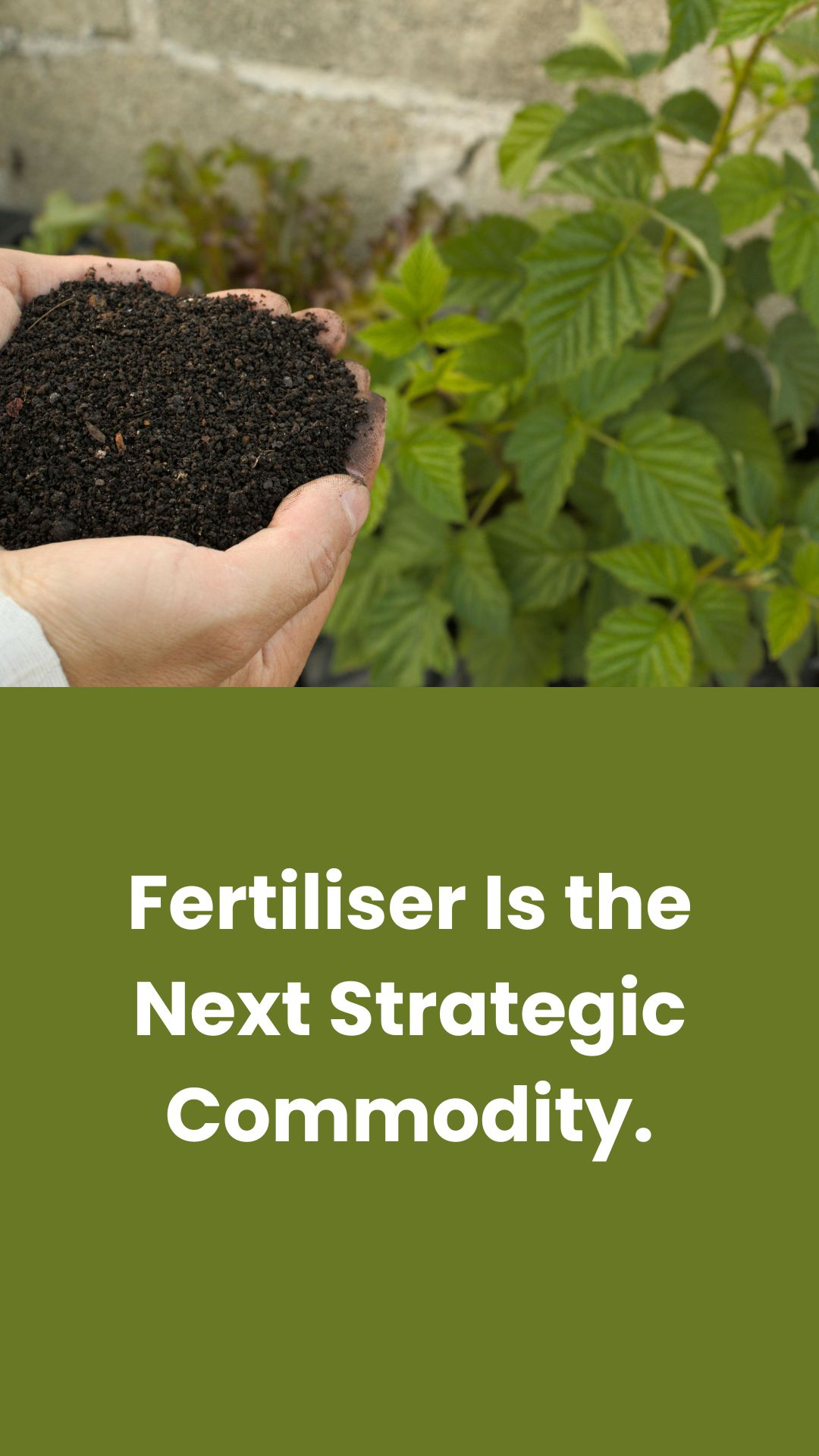
Fertiliser is often overlooked—until it disappears. Yet synthetic fertilisers are the backbone of modern agriculture, sustaining roughly half of global food production. When supply is disrupted, the effects ripple through farming, food manufacturing, global trade, and consumer prices.
Today, fertiliser supply chains face an unprecedented convergence of risks: geopolitical tensions, sanctions, shipping disruptions, energy price spikes, and concentrated production.
1. Concentrated Production Creates Systemic Risk
Global fertiliser production is dominated by a handful of countries:
- Russia
- Belarus
- Canada
- Morocco
- China
Russia and Belarus together historically supplied around 40% of global potash exports. Belarus depends on Russian transport infrastructure to export its fertiliser. When sanctions target one or both countries, trade flows are disrupted, directly affecting global availability.
Even when fertilisers themselves are exempt from sanctions, banking restrictions, insurance challenges, and port access issues complicate trade, slowing shipments and raising costs.
2. Energy and Shipping Disruptions Amplify the Problem
Nitrogen fertilisers are energy-intensive, with natural gas accounting for up to 80% of production costs. Energy price spikes or disruptions to natural gas supply—especially in Europe and the Middle East—reduce output.
Shipping is another chokepoint. Fertiliser trade often relies on maritime corridors such as the Strait of Hormuz and the Suez Canal. Conflict or congestion in these regions can delay shipments for weeks, further amplifying shortages and driving up insurance and freight costs.
3. The Immediate Supply Chain Ripple
When fertiliser supply tightens:
- Prices surge — farmers pay more for essential inputs.
- Farmers reduce fertiliser use — leading to lower crop yields.
- Agricultural output declines — affecting both food and feed crops.
- Livestock feed costs increase — raising meat, dairy, and egg production costs.
- Food manufacturing costs rise — impacting flour, oils, packaged foods, and processed meals.
- Retail food prices climb — consumers bear the brunt through higher grocery bills.
Even short-term disruptions can propagate through months of agricultural cycles, making the effects visible worldwide.
4. Geopolitics and Sanctions Intensify the Impact
- Russia is a major exporter of nitrogen, phosphate, and potash fertilisers. Sanctions on Russian banking and shipping create indirect barriers to trade.
- Belarus, heavily aligned with Russia, is restricted by export controls and relies on Russian infrastructure for ports and logistics.
- Other producers—Canada, Morocco, Saudi Arabia, and the United States—can benefit from higher global prices, capturing market share and reshaping trade flows.
The combination of sanctions, geopolitical alignment, and shipping vulnerabilities demonstrates how political risks are inseparable from supply chain resilience.
5. Strategic Winners and Shifting Trade Patterns
Supply disruptions also create opportunities:
- Countries with excess capacity or diversified export routes benefit from higher prices.
- Exporters in Canada, Morocco, and the U.S. have expanded markets.
- Governments invest in domestic fertiliser production to reduce dependence on geopolitically vulnerable sources.
These shifts may permanently reshape global agricultural trade patterns, making supply chain diversification a top strategic priority for both governments and companies.
6. SMEs and Global Supply Chains Are Squeezed
Small and medium-sized enterprises (SMEs) face particular pressure:
- Limited bargaining power to secure fertiliser supply
- Higher input costs with thin margins
- Vulnerability to cascading price increases in food processing and retail
Global logistics, already stressed by shipping disruptions and energy volatility, amplifies these risks. SMEs may struggle to plan procurement, adjust production schedules, or absorb cost shocks—highlighting the critical role of supply chain resilience in business continuity.
7. Policy and Risk Mitigation
Governments and businesses are responding with:
- Fertiliser subsidies for domestic farmers
- Strategic reserves and import agreements
- Diversification of suppliers and investment in alternative production
Companies and policymakers increasingly view fertiliser as a strategic commodityakin to energy, with supply chain planning and geopolitical risk management as core priorities.
8. Conclusion: Fertiliser as a Global Supply Chain Stress Test
Fertiliser shortages illustrate how tightly intertwined geopolitics, energy, shipping, and agriculture have become. Disruption in one part of the chain cascades through:
- Production
- Transport
- Processing
- Trade
- Retail
At the same time, alternative suppliers and countries can gain strategic advantage, highlighting both the risks and opportunities in global supply chains.
For governments, producers, and SMEs, fertiliser is no longer just an agricultural input—it is a strategic lever of food security and economic stability. Supply chain resilience, diversification, and contingency planning are no longer optional—they are essential.