Global Trade, Insurance, and the Enduring Role of Lloyd’s of London
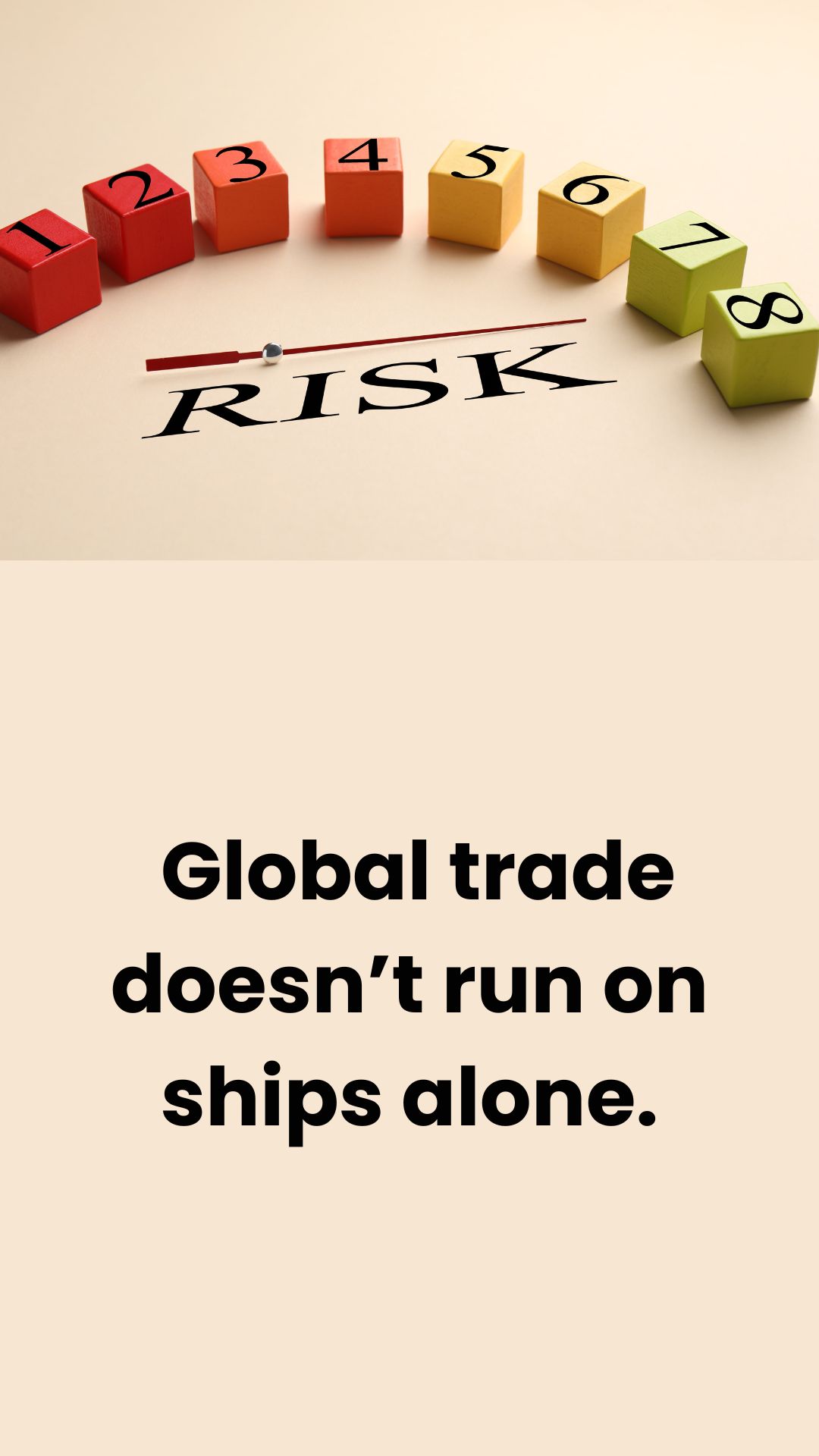
Global trade depends on more than ships, ports, and cargo. Beneath the visible machinery of commerce lies a financial system that allows goods to move across oceans despite uncertainty, conflict, and natural hazards. At the centre of this system is insurance. Without it, the modern trading network—worth tens of trillions of dollars annually—would struggle to function. Among the institutions that have shaped this framework, few are as influential as Lloyd’s of London.
From its origins in a seventeenth-century coffee house where merchants, shipowners, and financiers gathered to share news of voyages, Lloyd’s evolved into one of the world’s most important insurance marketplaces. Rather than operating as a single insurer, Lloyd’s functions as a market in which multiple underwriting syndicates pool capital to insure complex risks. This structure allows extraordinarily large or unusual exposures—from oil tankers and container fleets to satellites and energy infrastructure—to be shared across many participants.
Marine insurance sits at the heart of this system. A single vessel transporting crude oil or manufactured goods can carry cargo worth hundreds of millions of dollars. The voyage itself may pass through regions vulnerable to storms, piracy, political instability, or military conflict. Insurance allows those risks to be priced, distributed, and ultimately absorbed by global capital markets. Banks rely on insured cargo to finance shipments, ports rely on insured vessels for liability coverage, and shipping companies rely on insured fleets to maintain operations. Without insurance, many voyages would simply not occur.
The London market has long been a focal point for these arrangements. Over time it developed a dense ecosystem of specialised brokers, underwriters, maritime lawyers, and claims experts. Brokers play a particularly important role, assembling insurance “placements” in which multiple insurers each take a share of a large risk. A single ship might therefore be insured by dozens of underwriting syndicates or companies, with layers of reinsurance distributing the exposure even further around the world. This fragmentation can appear complex, but it provides resilience by ensuring that no single entity bears the full burden of catastrophic loss.
The structure also highlights a deeper reality about global trade: risk is not eliminated but managed collectively. Insurance transforms unpredictable events into quantifiable costs. Storm damage, war risks, environmental liabilities, and mechanical failures are all incorporated into pricing models and policy terms. The ability to assess and distribute these risks is one of the quiet enablers of globalisation.
Episodes of disruption occasionally reveal how central this system truly is. When geopolitical tensions rise or shipping lanes become hazardous, insurance premiums can surge and policy conditions tighten. The response of the insurance market often influences commercial behaviour as much as the physical threat itself. If coverage becomes scarce or prohibitively expensive, shipowners may reroute vessels, delay voyages, or withdraw capacity from certain regions. In this sense, insurers and reinsurers indirectly shape the flow of goods across the world’s oceans.
These moments offer broader lessons about the architecture of global commerce. First, the infrastructure supporting trade extends far beyond physical assets. Financial and legal frameworks—insurance markets, maritime law, and credit arrangements—are equally essential components of the system. Second, much of this infrastructure operates through private networks that have developed specialized expertise over decades. Governments and international institutions may regulate and oversee trade, but the operational mechanics often reside within industry ecosystems built around hubs such as London.
Finally, the history of marine insurance underscores the importance of adaptability. The nature of risk in global trade continues to evolve, encompassing cyber threats to shipping systems, climate-related disruptions, and increasingly complex supply chains. Institutions like Lloyd’s have persisted for centuries in part because their market structure allows new risks to be modelled and shared as they emerge.
In an era when global trade can appear fragile—buffeted by geopolitical tensions, environmental pressures, and technological change—the underlying insurance framework remains one of its stabilizing forces. By distributing risk across investors, insurers, and reinsurers worldwide, the system makes it possible for goods to travel thousands of miles with confidence that unforeseen events will not collapse the entire enterprise.
The ships that carry the world’s commodities may be the most visible symbol of globalisation. Yet behind every voyage lies a quieter network of contracts, underwriters, and brokers ensuring that trade continues to move, even through uncertain waters. In that hidden architecture, the marketplace of Lloyd’s of London remains one of the enduring pillars.