Resilience & Shocks: Why SMEs Need Support in Crisis
Introduction
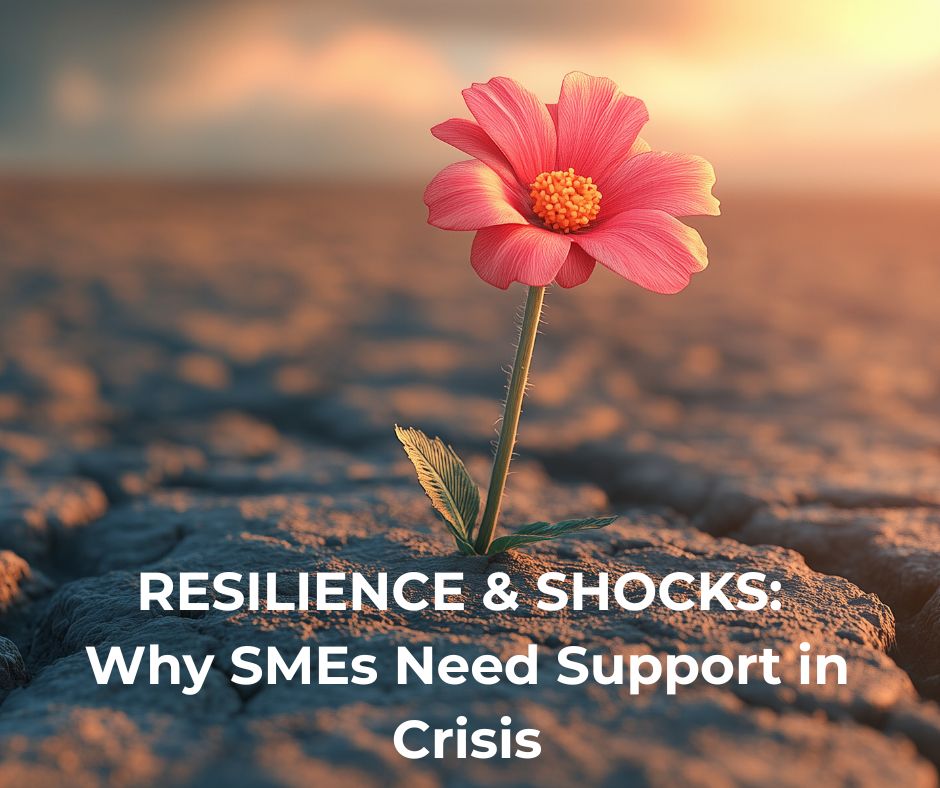
SMEs are agile but financially vulnerable. They lack buffers, so shocks such as pandemics, shipping disruptions, and commodity swings hit them hard. Targeted support enables rapid adaptation and keeps trade networks functioning.
SMEs and Crisis Response
Nimbleness allows SMEs to pivot, but limited credit, small cash reserves, and operational constraints increase vulnerability. Policies that mitigate these risks are crucial for economic resilience.
Case Study — South Africa Automotive SMEs
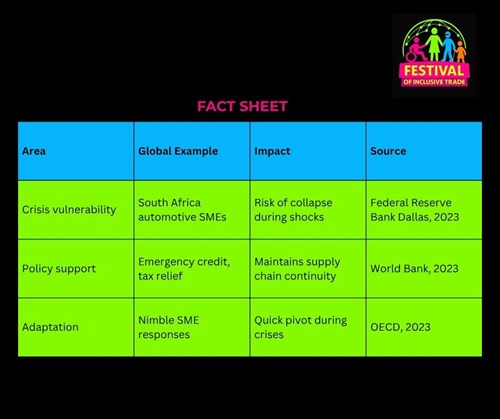
Small component suppliers in South Africa’s automotive clusters faced liquidity shortages during COVID-19. Emergency credit programs, tax relief, and accelerated payments helped these SMEs continue operations, maintaining regional supply chain resilience.
Policy Reflection: Supporting SMEs Through Shocks
Policy interventions include:
- Emergency credit and liquidity support.
- Digital invoicing and simplified customs.
- Targeted supply-chain support for critical SMEs.
FACT SHEET — SME Resilience
Key Takeaways
- SMEs are essential but vulnerable nodes in supply chains.
- Targeted support during shocks preserves employment and trade continuity.
- Policies for resilience are as important as growth strategies.
We will expand on these policy ideas and hear directly from SMEs around the world at next year’s Festival of Inclusive Trade. You too can engage, share your insights, and get involved in shaping the future of inclusive, resilient trade.