Trade Enablers: How SMEs Plug into Global Value Chains
Introduction
SMEs supply the specialised inputs, services, and logistics that underpin global value chains. Their integration into international trade is essential, and policies that lower barriers can dramatically increase their participation in global markets.
SMEs as Supply Chain Enablers
SMEs often provide hidden yet critical services: components, packaging, and Agro-products. They enable multinational supply chains to function, even as they face challenges accessing international buyers and meeting standards.
Case Study
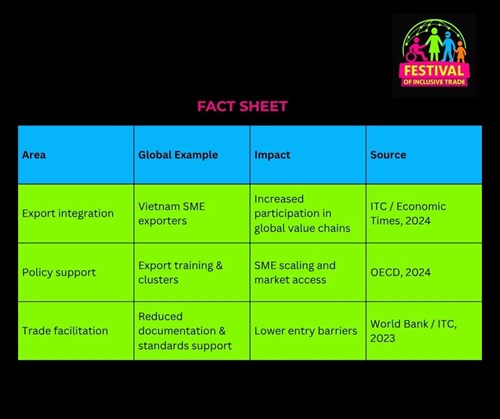
Vietnam’s SME Exporters In Vietnam, provincial SMEs supply electronics, furniture, and apparel exporters. Government programs offering export training, cluster development, and logistics support have allowed SMEs to integrate into global supply chains. Their success demonstrates the potential of policy-driven internationalisation.
Policy Reflection: Reducing Barriers to Trade
Effective policies include:
- Lowering fixed trade costs (documentation, standards).
- Facilitating market access through trade missions and B2B matchmaking.
- Strengthening logistics and export-readiness programs.
FACT SHEET — SMEs as Trade Enablers
Key Takeaways
- SMEs provide critical nodes in global trade.
- Policy support can rapidly scale SME participation in exports.
- Integration into global value chains enhances resilience and growth.
We will expand on these policy ideas and hear directly from SMEs around the world at next year’s Festival of Inclusive Trade. You too can engage, share your insights, and get involved in shaping the future of inclusive, resilient trade.