Value Chains in Action: Agriculture, Apparel, and Horticulture Examples
Introduction
SMEs are central to Agro-value chains and labour-intensive manufacturing. They process, pack, and add value to raw goods, enabling small producers to reach international markets and sustain livelihoods.
SMEs in Agricultural and Manufacturing Value Chains
SMEs facilitate export readiness, quality assurance, and logistics. Their density in certain sectors enhances a country’s competitiveness and employment base.
Case Study — Sri Lanka Apparel SMEs
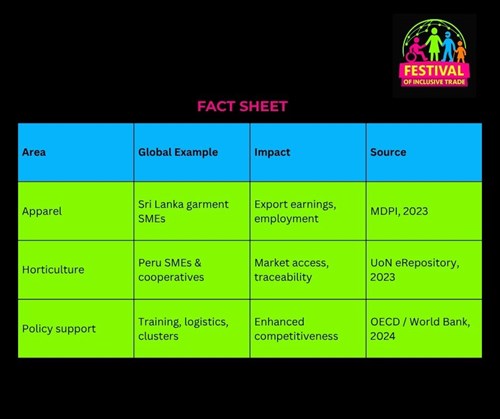
Sri Lanka’s garment sector relies on small suppliers for cutting, sewing, trims, packaging, and design. These SMEs enable the country to serve premium global buyers and maintain ethical manufacturing standards, supporting employment and export earnings.
Case Study — Peru Horticultural SMEs
Small Peruvian horticultural firms and cooperatives enable export of blueberries, asparagus, and avocados. SMEs provide cold-chain logistics, traceability, and compliance, helping smallholders access premium international markets.
Policy Reflection: Enhancing SME Value Chains
Key policy measures include:
- Technical assistance and training for quality and compliance.
- Cluster development and logistics infrastructure investment.
- Support for cooperative aggregation to increase bargaining power.
FACT SHEET — SMEs in Value Chains
Key Takeaways
- SMEs add value and link producers to global markets.
- Dense SME networks enhance national export performance.
- Policy support in training, logistics, and cooperatives boosts SME competitiveness.
We will expand on these policy ideas and hear directly from SMEs around the world at next year’s Festival of Inclusive Trade. You too can engage, share your insights, and get involved in shaping the future of inclusive, resilient trade.