
The Boozy Edition — Tariffs, Immigration, and the Spirited Shake-Up
13.08.2025
Raise your glass — but maybe don’t fill it too fast, because this week’s global trade headlines are giving the alcohol and beverage sector a serious hangover.

Raise your glass — but maybe don’t fill it too fast, because this week’s global trade headlines are giving the alcohol and beverage sector a serious hangover.

Meet "Jake", owner of “Hoppy Trails”, a craft brewery in Portland, Oregon. Known for its small-batch IPAs and seasonal brews, "Jake’s" business is built on quality ingredients, skilled workers, and reliable equipment. But recent global trade twists are turning his brewing dreams into a bitter brew.
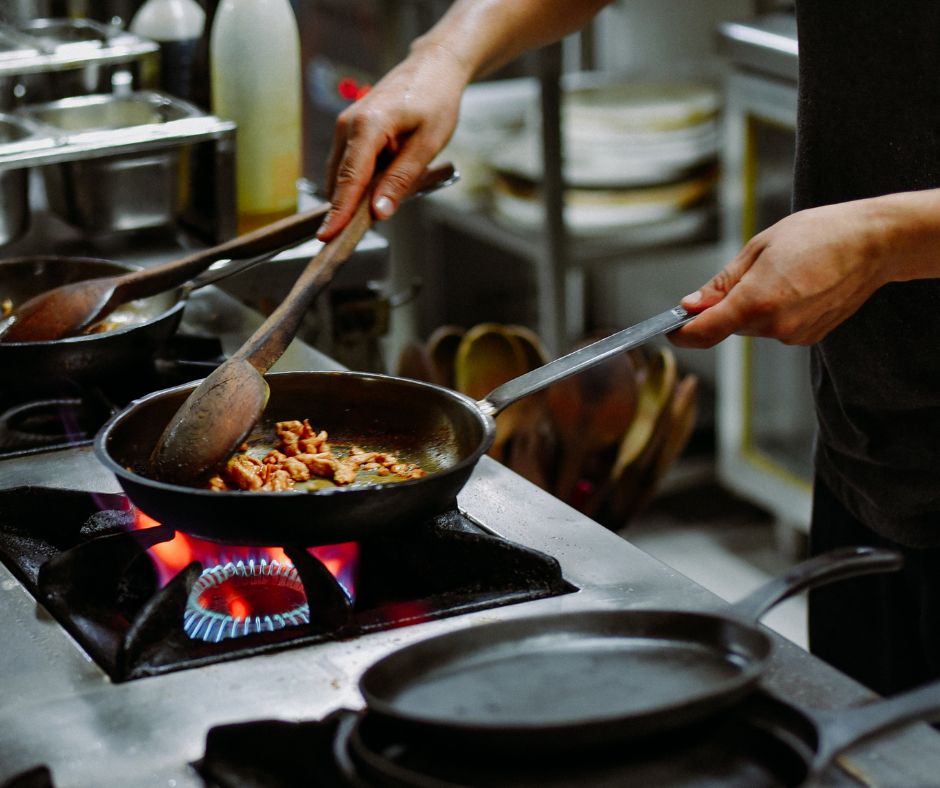
Meet "David", a chef-owner in Chicago whose upscale bistro is celebrated for its European-inspired menu — rich espressos, artisanal cheeses, seasonal produce, and indulgent desserts. But lately, "David" has been facing challenges that have nothing to do with cooking skills and everything to do with global trade shifts and policy changes.
Tariffs: The Hidden ‘Tax’ Adding Up
Since mid-2024, the U.S. imposed tariffs ranging from 10% to 25% on key imports that "Maria" relies on:
Hold on to your wallets, folks — this week’s global trade scene is looking like the sequel nobody asked for, but everyone’s feeling the sting.

The TradeExperettes’ SkillsLab is a monthly program offering interactive tutorials and hands-on practice to help Members boost their professional confidence and public speaking skills.
This special guidance session is designed for those attending their first international conference- whether speaking or participating- and wanting to navigate the experience with confidence.
Date & Time: Wednesday, August 13, 2025
09:00 EDT
15:00 CEST
21:00 CST (Beijing)

The Chile Pacific Foundation is pleased to announce the next edition of its Ambassadors Series, featuring a distinguished guest: Juan Gabriel Valdés, Ambassador of Chile to the United States.
This special dialogue will explore the multifaceted relationship between Chile and the United States, with a focus on how it is evolving amid today’s complex global environment. Discussion topics will include trade cooperation, economic opportunities, and the geopolitical challenges shaping bilateral and regional priorities.
Date: July 29, 2025
Summary: Today's announcement unveils a framework—not a full trade deal—between the U.S. and the European Union. The pact imposes a uniform 15% tariff on most European goods entering the U.S., a substantial increase from pre‑Trump levels (~1–2%) and higher than original EU proposals (around 10%)
Date: July 29, 2025
Summary:
The newly announced U.S.–EU “framework” is not a full trade agreement. It imposes a 15% tariff on most EU imports to the U.S., up from pre‑Trump levels of around 1–2%, while imposing no reciprocal tariffs on U.S. exports to the EU. There is no binding treaty text; these terms could shift in coming weeks.
1. Trump’s “largest deal ever” might not be a deal at all
President Trump declared the agreement with Japan “perhaps the largest Deal ever made,” asserting Japan would invest $550 billion in the U.S. and face a reciprocal tariff rate of 15% on exports to America (down from proposed 25%). However, Japanese officials have firmly denied that this constitutes a binding treaty or any formal commitment. Japan’s Cabinet Office stated profit-sharing will depend on “degree of contribution and risk,” not a fixed 90% return to U.S. investors, and clarified that there is no legally binding written.
On May 28, 2025, the US Court of International Trade determined that President Trump exceeded his authority under the International Emergency Economic Powers Act (IEEPA) of 1977 by unilaterally imposing broad global tariffs without congressional approval. The three-judge panel emphasised that the IEEPA does not grant the president "unbounded" authority to regulate imports via tariffs, reinforcing that such powers are constitutionally vested in Congress.
This ruling came in response to lawsuits filed by small businesses and a coalition of twelve Democratic-led states, who argued that the U.S. trade deficit did not constitute the "unusual and extraordinary threat" required to invoke the IEEPA.
They now behave more like a weather vane—spinning with the political wind. A bold Friday announcement is followed by a quiet Sunday reversal. This weekend was no different: President Trump unveiled a 50% tariff on EU imports, only to delay it two days later after a “very nice call” with EU Commission President Ursula von der Leyen.
This isn’t a one-off. Back in April, we had “Liberation Day,” complete with sweeping “reciprocal tariffs”—reversed within days after markets wobbled and pressure mounted.

It defies logic to think that targeting international students at Harvard—or any single institution—wouldn't have broader repercussions across the entire U.S. higher education sector. Why jeopardise a $43.8 billion industry that supports over 378,000 jobs?
Trump often touts his business acumen yet seems to overlook the fundamentals of service exports. Ironically, his own enterprises thrive on services like hospitality and branding.

As the UK edges toward realigning its food standards with the EU under the new Sanitary and Phytosanitary (SPS) agreement, some voices have begun to raise tired concerns about sovereignty and "regulatory control." But let’s be honest: these arguments are political theatre, not economic strategy — and they ignore what matters most to real British businesses.
President Donald Trump has announced a major new phase in U.S. trade policy: the United States will begin sending formal letters to over 150 countries, outlining new, unilateral tariff rates to be imposed on their exports. The move marks a departure from traditional trade negotiations in favour of what the administration calls a "streamlined tariff communication strategy.
The Comprehensive and Progressive Agreement for Trans-Pacific Partnership (CPTPP) is emerging as a pivotal trade framework in the 21st century. As global economic dynamics shift and traditional globalization models face challenges, the CPTPP offers a flexible, rules-based platform that could be more adaptable than existing structures like the World Trade Organisation (WTO).
Brought to you by the Global Trade Professional Alliance
In today’s fast-changing global environment, the rules that govern international trade, supply chains, and even online businesses can shift overnight. Whether you're managing operations, advising clients, or supporting a global network, staying informed is more important than ever.

On May 12, 2025, Donald Trump dusted off one of his greatest policy hits — the “Most Favoured Nation” (MFN) drug pricing rule. In true Trump fashion, he declared that America should pay no more than the lowest price any other developed country pays for prescription drugs.
“We’re the most favoured nation, folks. It’s right there in the name. So, we get the best deal,” he proclaimed, possibly confusing trade law with birthday party guest rankings.
First, it was penguins. Seriously.
In April 2025, the Trump administration imposed a 10% tariff on imports from Heard and McDonald Islands—two remote sub-Antarctic territories best known for being cold, wild, and completely uninhabited. No ports. No exports. Just penguins and seals living their best lives.
So let me get this straight: the UK just signed something called an “Economic Prosperity Deal” with the U.S., which sounds like a Netflix drama about trade envoys falling in love during a G7 summit.
Spoiler alert: it’s not romantic. It’s ransom. Economic hostage-taking, dressed up in diplomacy. Picture this: America walks into the room with a smug smile and a 10% tariff gun on the table.
The UK’s already sweating through its tailored Savile Row suit. “Nice economy you’ve got there,” says the U.S., polishing its MAGA mug. “Be a shame if something… happened to it.” And boom—out comes this "prosperity" deal. It’s called prosperity, but only for one side. The other side gets to smile awkwardly at a press conference and pretend like it didn’t just agree to terms last seen in a hostage video.
It's worth noting that earlier in 2025, the U.S. had implemented a 20% tariff on Chinese imports as part of measures to address the influx of synthetic opioids. However, the most recent agreement supersedes this, establishing a 30% tariff rate during the 90-day pause. Therefore, the current tariff rate is 30%, not 20%.

Ah, the much-heralded US-UK "breakthrough" economic agreement of May 2025. Let's peel back the layers of this so-called deal and see what's inside.
Upon closer inspection, this is a modest framework addressing specific sectors, with many critical issues left untouched. As Reuters noted, while the agreement offers immediate sectoral relief, it falls short of being comprehensive.
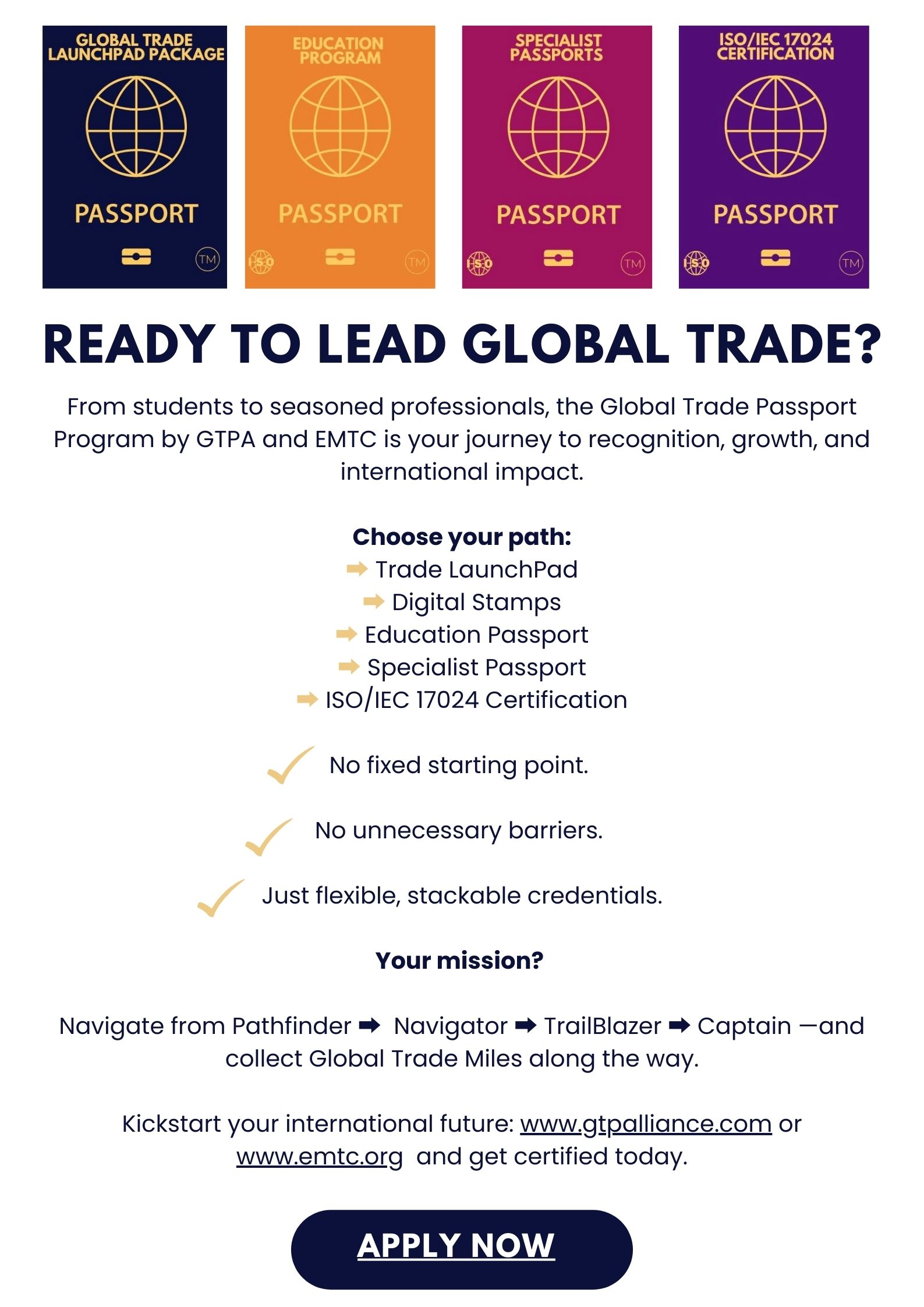
From students to seasoned professionals, the Global Trade Passport Program by GTPA and EMTC is your journey to recognition, growth, and international impact.

Reopening Free Trade Agreement (FTA) talks between Australia and the European Union (EU) is worth serious reconsideration—especially if Australia is willing to revisit its stance on Geographical Indicators (GIs). The deadlock over GIs, while significant, shouldn’t be viewed as insurmountable. Instead, it could be reframed as an opportunity—not only to unlock substantial trade benefits with one of the world’s largest markets, but also to carve a distinctive path that aligns with Australia’s evolving national identity and priorities, including reconciliation with Indigenous communities.
Donald Trump keeps repeating his greatest hits: “I set the deal. I do the deal. I’m doing the deals.”
Same line, same bravado—as if saying it enough times turns fiction into fact. But trade doesn’t work that way, especially with countries that have already learned how the show ends.
Now comes his latest plot twist: tariffs on movies made overseas.
Not goods. Not commodities. Movies.
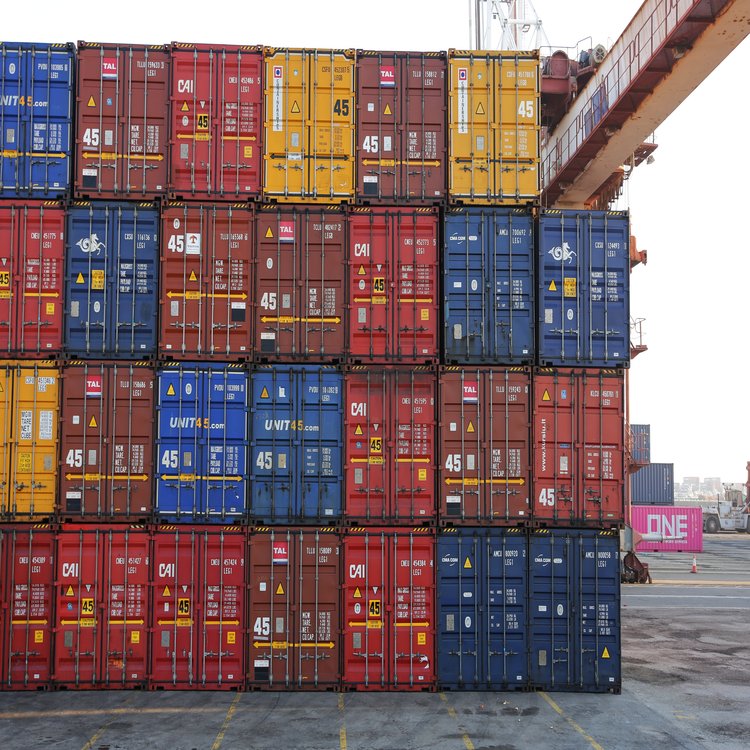
The LA Port Director explains it perfectly—most people don’t realise how far tariffs ripple through the economy. Every single container that passes through the port is tied to someone's job.

As of 12:01 am ET on May 2, 2025, low-value (<$800) direct-to-consumer (D2C) shipments comprising goods made in China, Hong Kong and Macau will no longer be eligible for duty-free entry to the U.S. under de minimis (19 U.S.C. Sec. 1321).
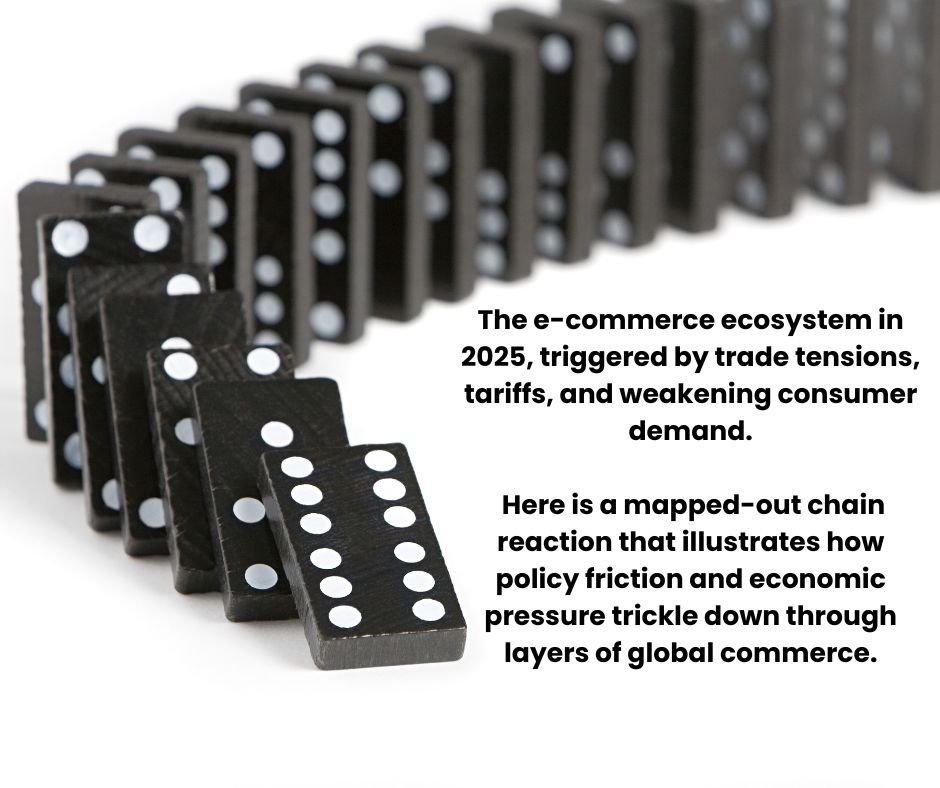
Forget Reagan’s version of trickle-down economics, which claimed that tax cuts for the wealthy would eventually benefit everyone. In today’s hyperconnected global economy, we’re witnessing a different — and far more immediate — form of real trickle-down: where disruption at the top of a supply chain causes cascading damage across industries, labour markets, and financial systems.
One stark example: the e-commerce ecosystem in 2025, triggered by trade tensions, tariffs, and weakening consumer demand. Below is a mapped-out chain reaction that illustrates how policy friction and economic pressure trickle down through layers of global commerce.
Over the last few weeks, it’s become more evident than ever that the media needs to start listening to women economists. Their insights into economic trends, consumer behaviour, and market shifts are often ahead of the curve and they’re the key to understanding what’s really driving today’s global economy. The reality is clear: women are not just consumers—they shape the future of industries, markets, and trade, and their voices are essential for a full, accurate understanding of the economic landscape.

The executive order mandating English proficiency for truck drivers raises a fundamental question: is now the right time to introduce a stricter language mandate in an industry already strained by reduced freight and acute labour shortages?
Let’s be clear—this isn’t about whether truckers can read road signs (most can). It’s about enforcing broader standards: the ability to communicate clearly with law enforcement, complete documentation, and navigate the regulatory demands of cross-border and domestic transport. And that could have real consequences.
Part 4 of a 4-Part Deep Dive for Global Online Sellers.
As U.S. tariffs continue to shift, especially with the growing scrutiny around goods made in China, online sellers shipping direct-to-consumer into the U.S. need more than just a solid product — they need a clear tariff strategy.
The problem? Many U.S. consumers are still unaware that they might have to pay tariffs upon delivery — and that lack of understanding is creating a painful (and costly) ripple effect for e-
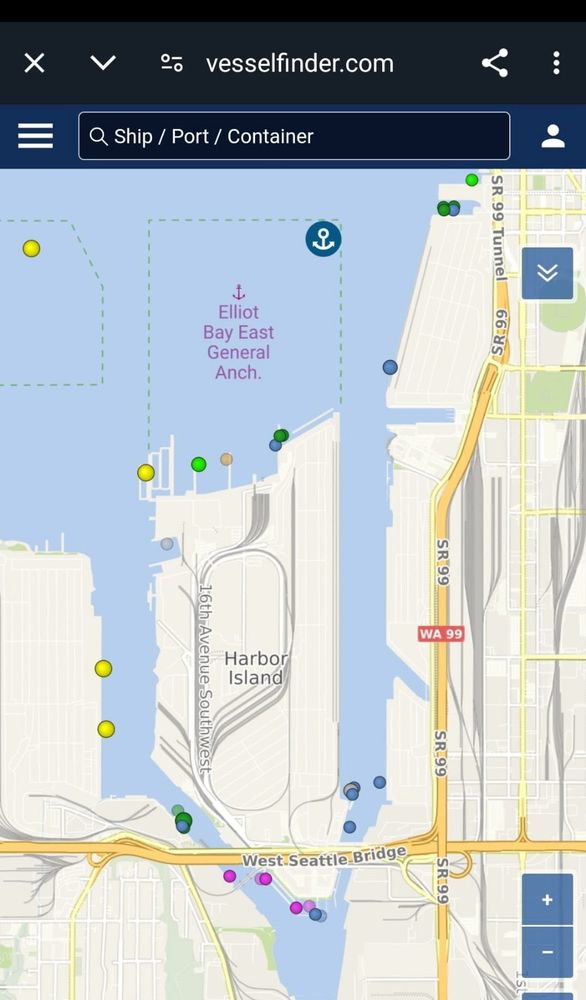
We all knew this was coming, right??
If you want to spot global trade trends early, just watch shipping, air cargo, rail, and trucking — the four pillars of the supply chain.

This weekend, the Wall Street Journal seemed surprised by the continued strength of U.S. consumer spending, even in the face of rising economic uncertainty. (WSJ) However, what they may have overlooked is that consumer behaviour has actually been pretty consistent since the election. People are smart — they’re aware of the potential impact tariffs can have on everything from consumer goods to food and groceries, and they’re acting.
Part 3 of a 4-Part Deep Dive for Global Online Sellers.
If you're an e-commerce seller working with manufacturers in China or Vietnam, and you're selling into the United States, it's essential to understand Rules of Origin (RoO). These rules determine the country of origin of your goods — and that matters a lot when it comes to tariffs and compliance.
Let’s break it down — especially if you're sourcing materials or assembling products in multiple countries.

A practical session focused on market entry, this webinar will provide participants with an understanding of how to initiate business operations in the market with an emphasis on regulatory, legal, tax and strategic aspects, addressing the following objectives:
As the U.S. trade environment evolves, especially with the reactivation of aggressive tariffs under President Trump, online sellers shipping into the United States are navigating uncharted terrain. This GTPA Trade Pulse mini-series is designed to give you the practical insights, compliance strategies, and tariff intel you need to stay ahead — and stay profitable.
The Global Trade Passport Program is a digital credentialing initiative that opens doors to a wide range of foundational and specialised courses in international trade, supply chain, finance, compliance, policy, and more. Delivered through GTPA & EMTC, each course you complete earns you a digital badge – or “stamp” – that highlights your achievement and builds your professional credibility.
April 24, 2025
Reverse Uno? Trump Rewinds Tariffs—but Keeps His Cards Close
On April 24, President Donald Trump rolled back parts of the “Liberation Day” tariff blitz announced earlier this month. Facing heavy domestic pressure from business lobbies, public backlash, and early signs of economic strain, the administration has taken what some are calling a strategic sidestep under pressure — or in trade circles, a classic “Reverse Uno”.
Are you ready to embark on a global journey of growth and opportunity?
The Global Trade Passport Program is your gateway to mastering international trade through a flexible, personalised micro-credential experience. Whether you're building new skills or advancing existing ones, this dynamic program empowers you with digital badges and recognised credentials that validate your expertise in the ever-evolving world of global commerce.
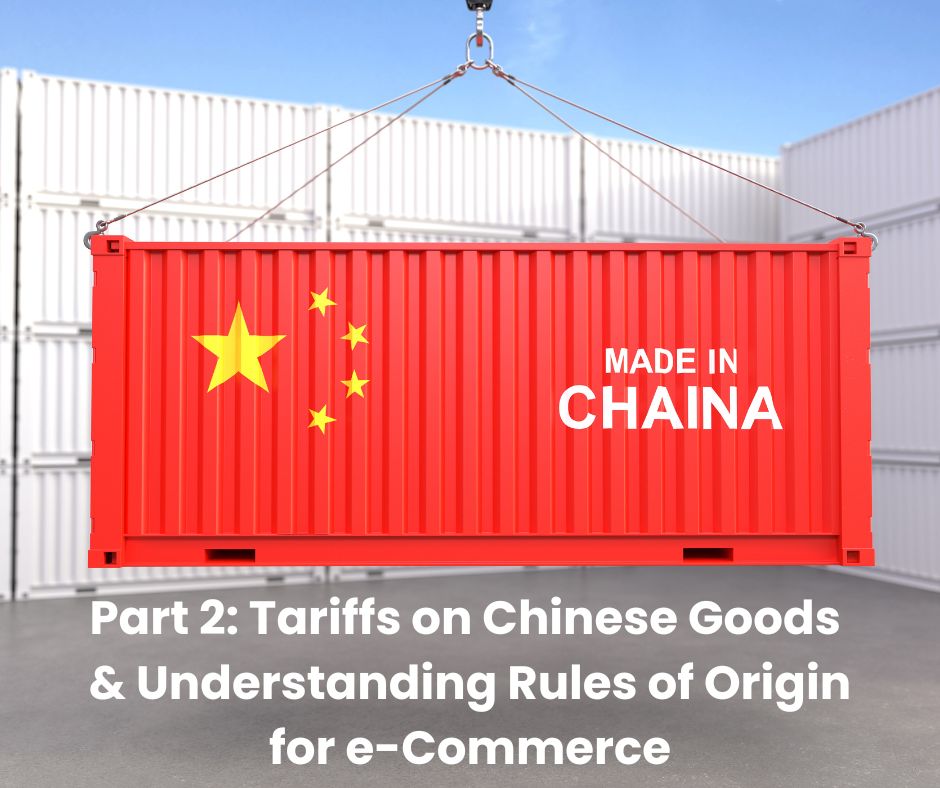
Part 2 of a 4-Part Deep Dive for Global Online Sellers.
As the global e-commerce landscape evolves, online sellers shipping to the U.S. must prepare for increasing complexity around tariffs — especially when sourcing from China. This article takes a closer look at how tariffs on Chinese goods are determined and why understanding Rules of Origin (RoO) is essential to protect your margins and stay compliant.