
Get Regular Updates

How We Got Here: From Obama’s TPP to 2026 and Why U.S. Trade Policy Shifts Matter

23.02.2026 Lisa McAuley, CEO

The current discussions about linking major trade blocs such as the European Union and the Comprehensive and Progressive Agreement for Trans-Pacific Partnership (CPTPP) are rooted in a long and often turbulent evolution of trade policy over the last two decades. Central to that story are decisions made by U.S. leaders, global strategic competition (especially with China), and how trade agreements have shifted course and purpose.

Read More..

Be the Link That Holds the Chain Together

20.02.2026 Lisa McAuley, CEO

In today’s supply chains, visibility is increasing and so is responsibility.

Trade and supply chain functions are no longer operating quietly in the background.

Rising costs, regulatory scrutiny, and tariff volatility have pushed trade decisions into the spotlight — and supply chains can only keep moving when trade, logistics, procurement, and distribution work in sync.

Read More..

Mark Carney’s Global Trade Push: What SMEs Should Know

20.02.2026 Lisa McAuley, CEO

With rising trade tensions and shifting global alliances, Canadian Prime Minister Mark Carney is pushing discussions aimed at bringing the European Union and the Comprehensive and Progressive Agreement for Trans-Pacific Partnership closer together. While still early, these talks could shape trade dynamics that matter to small and medium enterprises (SMEs).

Read More..

Indigenous Practices in Global Trade: Ongoing Collaboration and Sustainability

30.01.2026 Lisa McAuley, CEO

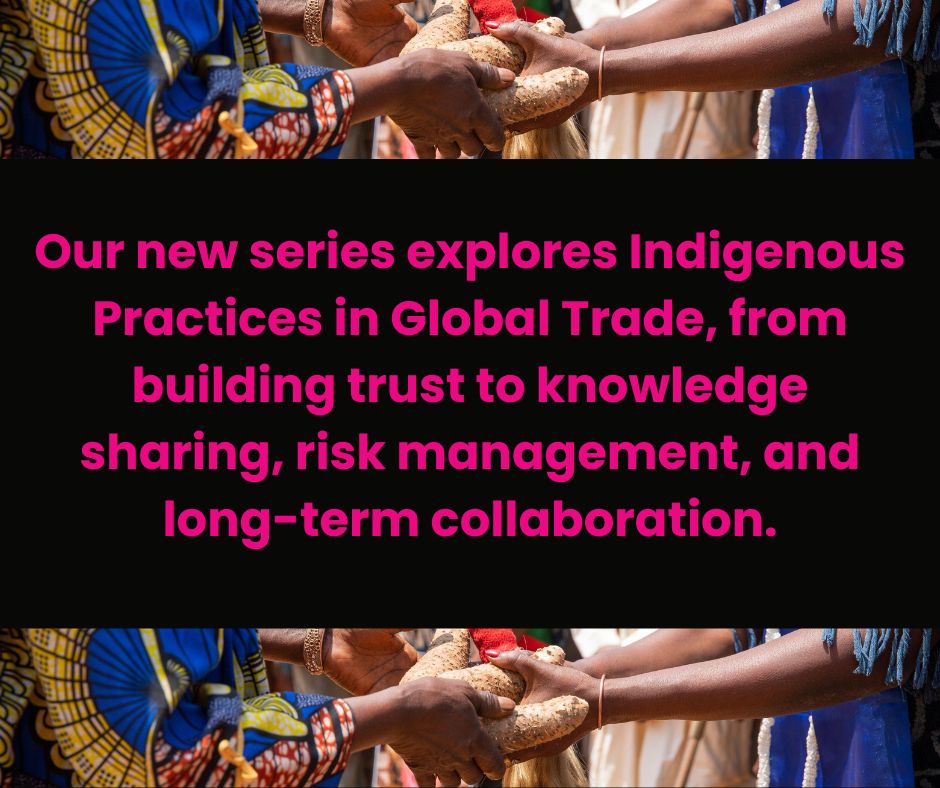
Sustainable trade goes beyond transactions—it relies on long-term partnerships, continuous engagement, and the integration of Indigenous voices in decision-making. Indigenous enterprises and communities around the world demonstrate how ongoing collaboration strengthens supply chains, builds resilience, and preserves cultural and ecological knowledge for future generations.

Read More..

Indigenous Practices in Global Trade: Impact and Evaluation

28.01.2026 Lisa McAuley, CEO

Measuring the success of trade initiatives goes beyond revenue and market reach. For Indigenous enterprises and communities, impact is defined by social, ecological, and intergenerational outcomes. Integrating Indigenous perspectives into monitoring, evaluation, and learning (MEL) frameworks ensures that global trade benefits communities, ecosystems, and cultural knowledge for generations.

Read More..

Indigenous Practices in Global Trade: Validation and Consent

26.01.2026 Lisa McAuley, CEO

Ethical engagement is a cornerstone of inclusive trade. Indigenous communities have long emphasised that trust, consultation, and consent are essential when engaging in commercial or supply chain initiatives. Validation and free, prior, and informed consent (FPIC) ensure that Indigenous knowledge, cultural heritage, and resources are used respectfully and equitably.

Read More..

Globalisation isn’t broken — it’s how it’s been designed that shapes who benefits

22.01.2026 Lisa McAuley, CEO

Much of today’s criticism of globalisation is rooted in a fundamental misunderstanding. Globalisation is often treated as synonymous with global trade, and when economic outcomes disappoint, trade itself is blamed. This conflation obscures the real issue. Global trade is only one element of globalisation, and it is not inherently harmful. The problem lies in how globalisation has been structured and who it has been designed to serve.

Read More..

Why Experts Say the “Rules-Based International Order” Is Breaking Down

21.01.2026 Lisa McAuley, CEO

  1. What the Rules-Based International Order Was

After World War II, Western powers — especially the United States — built a system of international institutions and norms designed to manage global cooperation. This included frameworks for trade (General Agreement on Tariffs and Trade, later the WTO), collective security (NATO, United Nations), financial stability (Bretton Woods institutions), and international law. For decades, this framework helped reduce barriers to trade, create dispute resolution mechanisms, and generally provided predictability in global affairs.

Read More..

Indigenous Practices in Global Trade: Context and Language

21.01.2026 Lisa McAuley, CEO

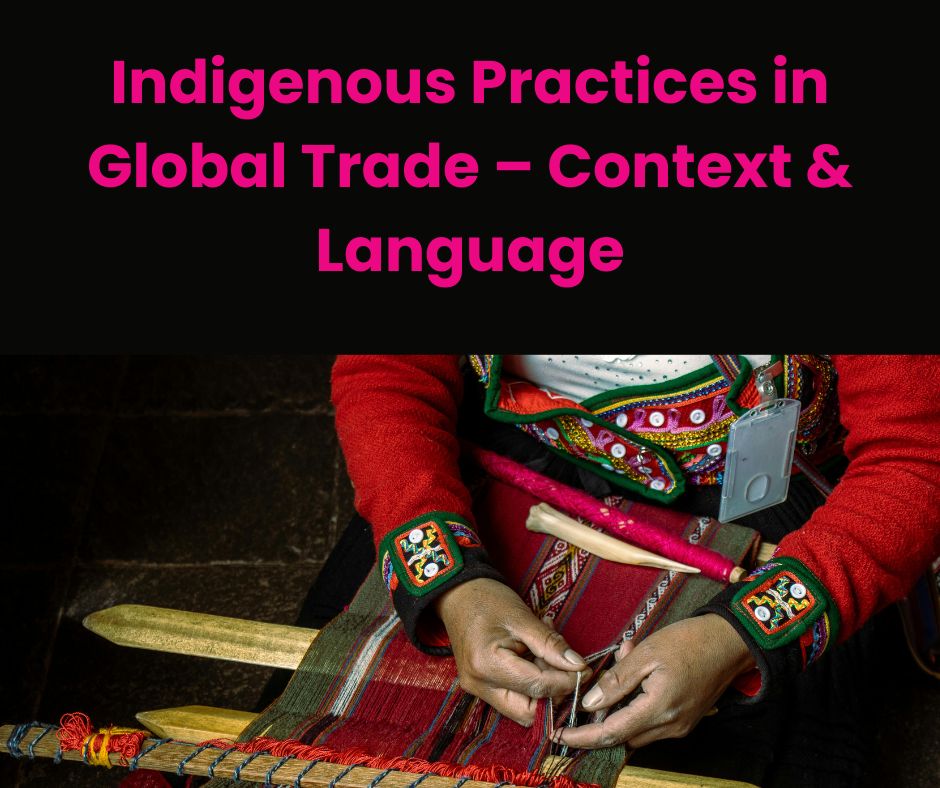
Language, context, and cultural understanding are fundamental to inclusive trade. Indigenous business leaders and communities bring unique knowledge systems, decision-making practices, and storytelling methods that can strengthen global trade programs and supply chains. Embedding Indigenous voices as co-educators and co-designers ensures that trade initiatives are culturally relevant, ethically guided, and globally competitive.

Read More..

Indigenous Practices in Global Trade: Application – Supply Chain Diversification and Risk Management

20.01.2026 Lisa McAuley, CEO

Indigenous trade practices have long emphasised adaptability, ecological stewardship, and diversified networks—principles that are increasingly relevant for modern global supply chains. From the Yup’ik communities of Alaska to Māori fisheries in Aotearoa/New Zealand, Indigenous enterprises demonstrate how traditional knowledge can inform risk management, ecological sustainability, and resilient trade networks.

Read More..

EU Update: Suspension of EU–U.S. Tariff Discussions

19.01.2026 Lisa McAuley, CEO

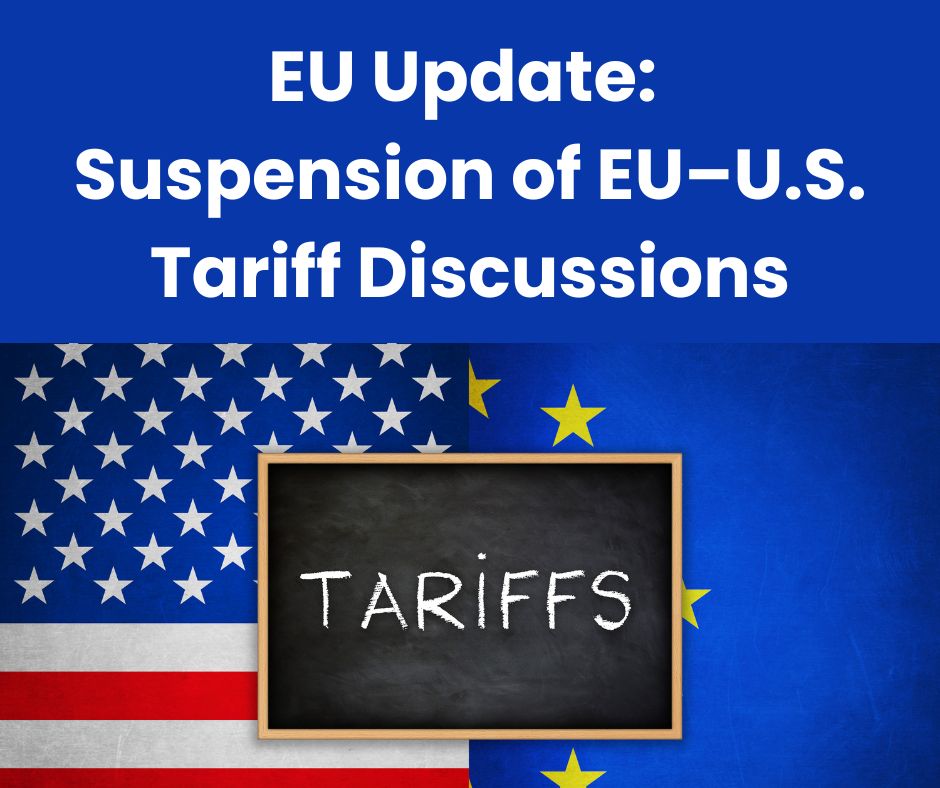
European Union lawmakers have moved to halt approval of an EU–U.S. trade deal and accompanying tariff discussions in response to recent U.S. tariff threats tied to negotiations over Greenland. Parliament leaders have indicated that a trade agreement cannot proceed at this stage given the current climate, effectively suspending formal tariff talks with the United States.

Read More..

What the EU “Trade Bazooka” Actually Is

19.01.2026 Lisa McAuley, CEO

The “EU trade bazooka” isn’t a literal weapon — it’s a nickname for the European Union’s Anti-Coercion Instrument (ACI), a powerful legal tool designed to protect the EU and its member states from economic coercion by third countries.

Read More..

Indigenous Practices in Global Trade: Knowledge Gathering

16.01.2026 Lisa McAuley, CEO

Knowledge is the lifeblood of trade. In Indigenous cultures around the world, knowledge is gathered, shared, and preserved through oral traditions, storytelling, and community practice. These methods are not only cultural expressions—they are sophisticated systems for managing resources, guiding trade relationships, and sustaining supply chains. Integrating Indigenous knowledge gathering practices into global trade can enhance innovation, resilience, and cultural respect.

Read More..

Indigenous Practices in Global Trade: Building and Honouring Relationships

14.01.2026 Lisa McAuley, CEO

In Indigenous cultures around the world, relationships form the foundation of trade—not just transactions. From the Māori of Aotearoa/New Zealand to the Quandamooka People of Stradbroke Island, Indigenous trade practices prioritise trust, reciprocity, and long-term partnerships. These principles offer vital lessons for global trade and supply chains today, strengthening ethical, resilient, and inclusive networks.

Read More..

Trade Enablers: How SMEs Plug into Global Value Chains

07.01.2026 Lisa McAuley, CEO

Introduction

SMEs supply the specialised inputs, services, and logistics that underpin global value chains. Their integration into international trade is essential, and policies that lower barriers can dramatically increase their participation in global markets.

Read More..

Resilience & Shocks: Why SMEs Need Support in Crisis

07.01.2026 Lisa McAuley, CEO

Introduction

SMEs are agile but financially vulnerable. They lack buffers, so shocks such as pandemics, shipping disruptions, and commodity swings hit them hard. Targeted support enables rapid adaptation and keeps trade networks functioning.

Read More..

Innovation & Inclusion: Digital Tools, Finance, and Green Transition

07.01.2026 Lisa McAuley, CEO

Introduction

Digital innovation, financial technology, and green upgrading are transforming the way SMEs engage in global trade. Digital marketplaces, traceability systems, and fintech solutions lower entry costs, expand market access, and enable SMEs to participate in sustainable supply chains. Meanwhile, environmental sustainability is increasingly a prerequisite for global market inclusion.

Read More..

Epilogue: The Case for SMEs at COP & the Festival of Inclusive Trade

07.01.2026 Lisa McAuley, CEO

By the Global Trade Professionals Alliance (GTPA)

Introduction

SMEs are central to sustainable, resilient, and inclusive trade. As climate change and social inclusion become priorities, SME participation in global markets is critical. Supporting SMEs to decarbonize, scale sustainably, and integrate into trade networks is essential for achieving global economic and environmental goals.

Read More..

Reflecting on 2025, Preparing for 2026

06.01.2026 Lisa McAuley, CEO

As 2025 has closed, organisations and SMEs have navigated an environment of unprecedented complexity—rapid digital transformation, shifting trade policies, and supply chain disruptions.

Looking ahead, 2026 promises even greater unpredictability in global trade, digital commerce, and regulatory landscapes. In such a dynamic context, building resilient, adaptable trade capability is no longer optional—it’s essential.

Read More..

Happy Holidays

23.12.2025 Lisa McAuley, CEO

As 2025 comes to a close, we want to thank our community for your continued support during a challenging year for global trade and supply chains. This year tested every SME—and everyone supporting SMEs in global trade—but it also reinforced the importance of resilience, adaptability, and building strong foundations for the future.

Read More..

Navigating Global Trade: Why Practical Resources Are Essential for SMEs and Trade Professionals

10.12.2025 Lisa McAuley, CEO

Global commerce is increasingly complex. Shifting tariffs, evolving regulations, and supply chains that sometimes seem to move according to their own mysterious logic can leave even the savviest SMEs scratching their heads. In fact, if there were a Global Tariff and Paperwork Apocalypse (GTPA) ranking, many small businesses might feel they’re perpetually on the leaderboard.

Read More..

Resilient Now. Ready for What’s Next

09.12.2025 Lisa McAuley, CEO

2025 has tested the resilience of every SME — from supply chain shocks to shifting trade rules and unpredictable markets.

If your team has been in survival mode, you’re not alone. The challenge now is turning survival into stability.

Read More..

Ancient Wisdom: Indigenous Agricultural Knowledge Driving Sustainable Trade

03.12.2025 Lisa McAuley, CEO

Modern agriculture often draws on high-tech inputs and monocultures, but globally, Indigenous and traditional farming systems continue to show how deeply rooted ecological knowledge can deliver sustainable productivity — and even become part of international trade. Across continents, communities are reviving ancestral methods, stewarding biodiversity, and producing unique crops that command niche markets around the world.

Read More..

Liquid Gold: Honey, Culture, and Commerce Across Borders

28.11.2025 Lisa McAuley, CEO

Pollinators’ contributions extend beyond crop yields; they also produce honey, a product that combines economic value, cultural significance, and ecological insight. Often called “liquid gold,” honey reflects the health of the ecosystems from which it comes and the skill of those who cultivate it.

Read More..

The Smart Hive: Technology, Innovation, and the Future of Pollination

27.11.2025 Lisa McAuley, CEO

As global agriculture faces rising pressures from climate change, habitat loss, and growing populations, technology is emerging as a vital tool to support pollinators.

Advanced solutions are transforming how we monitor, manage, and even supplement pollinator activity, bridging ecological needs with human innovation.

Read More..

Ancient Knowledge: Indigenous and Traditional Pollination Wisdom

24.11.2025 Lisa McAuley, CEO

Modern science increasingly validates what Indigenous and traditional communities have known for centuries: pollinators thrive when human practices work in harmony with nature.

Across the globe, these communities have developed sustainable practices that maintain biodiversity, protect habitats, and optimise agricultural cycles.

Read More..

Jobs & Growth: SMEs as Job Creators and Innovators

21.11.2025 Lisa McAuley, CEO

Introduction 

SMEs are engines of job creation, innovation, and income generation. They often employ youth and women, providing pathways out of poverty and reducing inequality. Their experimental capacity drives local innovation, with successful practices often scaling into broader markets.

Read More..

Securing the Future: Building Pollination-Positive Trade Systems

20.11.2025 Lisa McAuley, CEO

Pollinators are the silent partners in agriculture and global trade, yet their protection requires deliberate action from both policymakers and industry leaders.

Securing the future of pollination means integrating ecological stewardship directly into trade and agricultural systems.

Read More..

SMEs: The Backbone of Global Trade and Supply Chains series

19.11.2025 Lisa McAuley, CEO

Part 1 — Backbone: Why SMEs Matter Everywhere 

Introduction

Small and medium enterprises (SMEs) are the engine room of every economy—they make up most firms, create most jobs, and link local production to global markets. Protecting and enabling SMEs is central to resilient, inclusive trade. They operate across every sector, from manufacturing to tech to services, underpinning economic diversity and local resilience.

Read More..

80 Years of Relations between Chile and Australia: Milestones and Prospects for an Alliance of Present and Future

18.11.2025 Chile Pacific Foundation

Chile Pacific Foundation Hosts Webinar on Strengthening Chile–Australia Collaboration

The Chile Pacific Foundation is pleased to invite participants to an insightful webinar dedicated to exploring the full potential for collaboration, trade, and investment between Chile and Australia. This special event comes at a significant moment, as both nations celebrate the 80th anniversary of their diplomatic relations—an ideal backdrop for renewed dialogue and future-focused partnerships.

Read More..

Australia Gains Momentum in Trade: U.S. Tariff Removal and Domestic Reform Signal New Era

17.11.2025 Lisa McAuley, CEO

Over the past weekend, Australia experienced a notable shift in its trade landscape. The United States lifted tariffs on more than 200 food products, including Australian beef, while the Albanese government advanced its internal agenda to abolish hundreds of low-revenue “nuisance tariffs.” Together, these developments underscore a growing commitment to open trade and economic efficiency, promising opportunities for exporters and cost reductions for domestic businesses.

Read More..