
GTPA announces an alliance with Raised Hand to help businesses connect to talented professionals
29.04.2020
The GTPA is pleased to announced an alliance with Raised Hand, a new initiative created by a previous work friend of the GTPA team.

The GTPA is pleased to announced an alliance with Raised Hand, a new initiative created by a previous work friend of the GTPA team.
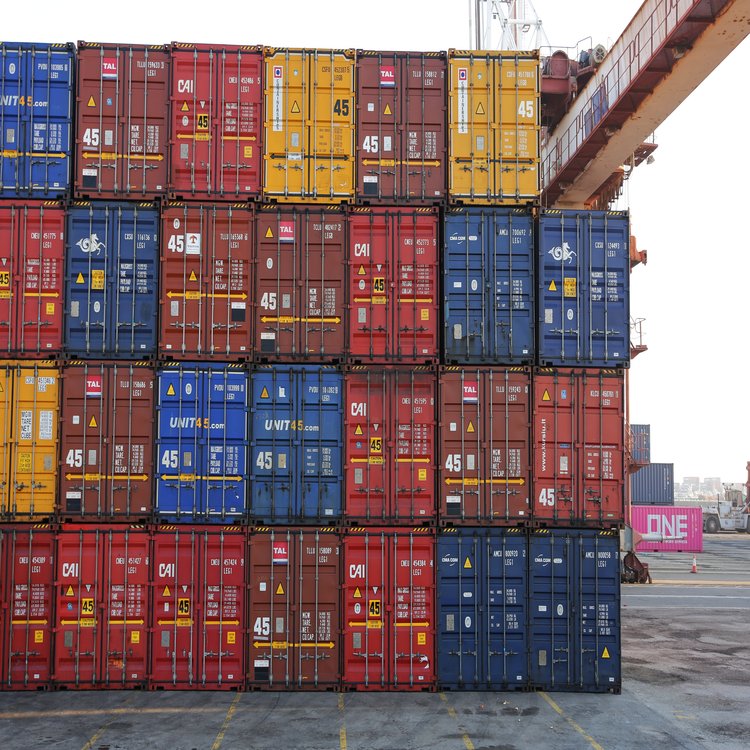
No one business, and certainly no MSME, needs to navigate these rather stormy waters alone
As these lines are being written, micro, small and medium enterprises (MSMEs) around the world are closing their operations. No one business, and certainly no MSME, needs to navigate these rather stormy waters alone.While the global business landscape is changing quite rapidly, we are confident that the global business environment will eventually stabilise. In the meantime, businesses’ capacity to survive will depend on their ability to innovate the ways in which they communicate, manage their business, and engage customers.
As part of the Mohammed bin Rashid Initiative for Global Prosperity GTPA will be presenting an online Ted-Style talk in May to discuss this topic.

Ian George is the Owner of ProPar Consulting Ltd a procurement and supply management consultancy specialising in organisational transformation and leadership development. Owner of IP based on academic rigour grounded in consulting practice. Prior to this Ian was the Head of Strategy and Process Development, Philips Electronics Eindhoven, The Netherlands 2000-2002, a global organisation covering six divisions from medical devices, body care and entertainment to silicon chips. Responsible for €16bn spend administered by 2600 staff across 93 offices and Supplier Development Senior Manager, BMW Group Birmingham, UK and South Carolina, USA.

Rob Handfield is the Bank of America University Distinguished Professor of Supply Chain Management at North Carolina State University, and Director of the Supply Chain Resource Cooperative. He also serves as Faculty Lead for the Manufacturing Analytics group within the International Institute of Analytics, and is on the Faculty for Operations Research Curriculum at NC State University.

By Professor Peter Draper - Institute for International Trade
If ever the G20, the self-styled apex forum for international economic cooperation, needed to step up to the plate it is now. However, while it did so for the 2009 London Summit — in the eye of the Global Financial Crisis (GFC) — it is highly unlikely to this time. It is also not clear what the definition of success is, unlike the GFC when the core objective was to save Western financial systems from collapse. Each G20 country is correctly focused on managing its own health trajectory, with little policy bandwidth left to devote to international economic cooperation.
This week we will be discussing Managing supply chain risks as part of our online business health check series. We are delighted to be joined this week by supply chain experts: Dr Robert Handfield from the United States of America and Dr Ian George from the United Kingdom.

In the past few months, we’ve all added a string of new acronyms and terms to our business vocabulary. WFH (work from home), BYOD (bring your own device), and FoW (future of work) have entered into everyday usage, while “asynchronous/synchronous communication”, “distributed team/work”, “cloud work”, and others, are gaining mainstream traction.

As part of the maintaining a healthy business in times of global crisis. Yesterday’s session covered slowed business and increased marketing. The forum covered how to see slowed business as an opportunity to spend more time communicating and building a future customer base. You need to do more now, not less! Whether it’s doing what you’ve always done, or something different, the market must know if your business is going to survive this crisis.

JOIN US FOR A LIVECAST
As the world grapples with COVID-19, the International Chamber of Commerce (ICC) has issued two guidance publications to help governments and regulators deal with emerging trade finance disruptions.
Friday 24 April 2020
8:00 am EST | 2:00 pm CET | 5:30 pm IST | 8:00 pm SGT
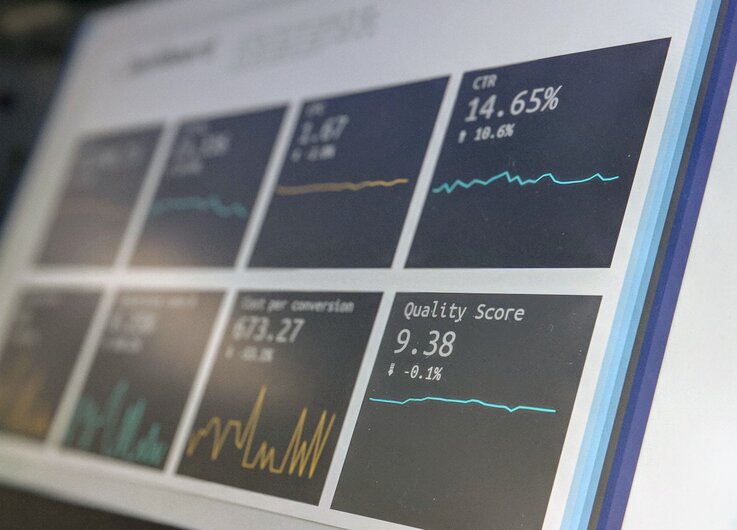
Join us for the free webinar on Thursday, April 16th at 2:30pm EDT.
Every sector of the economy is struggling to understand how to continue given the impact of the Coronavirus on their business enterprises. Workers are now communicating through remote conferencing services due to shelter-at-home orders, and anxiety levels are rising as the economic future remains uncertain.

As part of the maintaining a healthy business in times of global crisis, this session covered making the most of business down time.
Business disruptions caused by COVID-19 are affecting many people’s ability to fulfill their obligations under commercial contracts. In some cases, Force Majeure contract clauses may provide relief from the performance of impeded contractual obligations during the pandemic-related disruptions.

The once-in-a-century crisis we all find ourselves confronted with by COVID-19 will end up exacting both a horrific toll in terms of loss of life but also short and medium term economic damage.

In this rapidly changing jobs market the Australian Government is supporting businesses and those Australians looking for work.
While many businesses have been adversely affected by COVID-19 and are reducing their workforces, there are some areas of the economy which have an increased demand for workers.
The Cyber Readiness Institute (CRI) is organising two webinars which will take place at the end of this week.
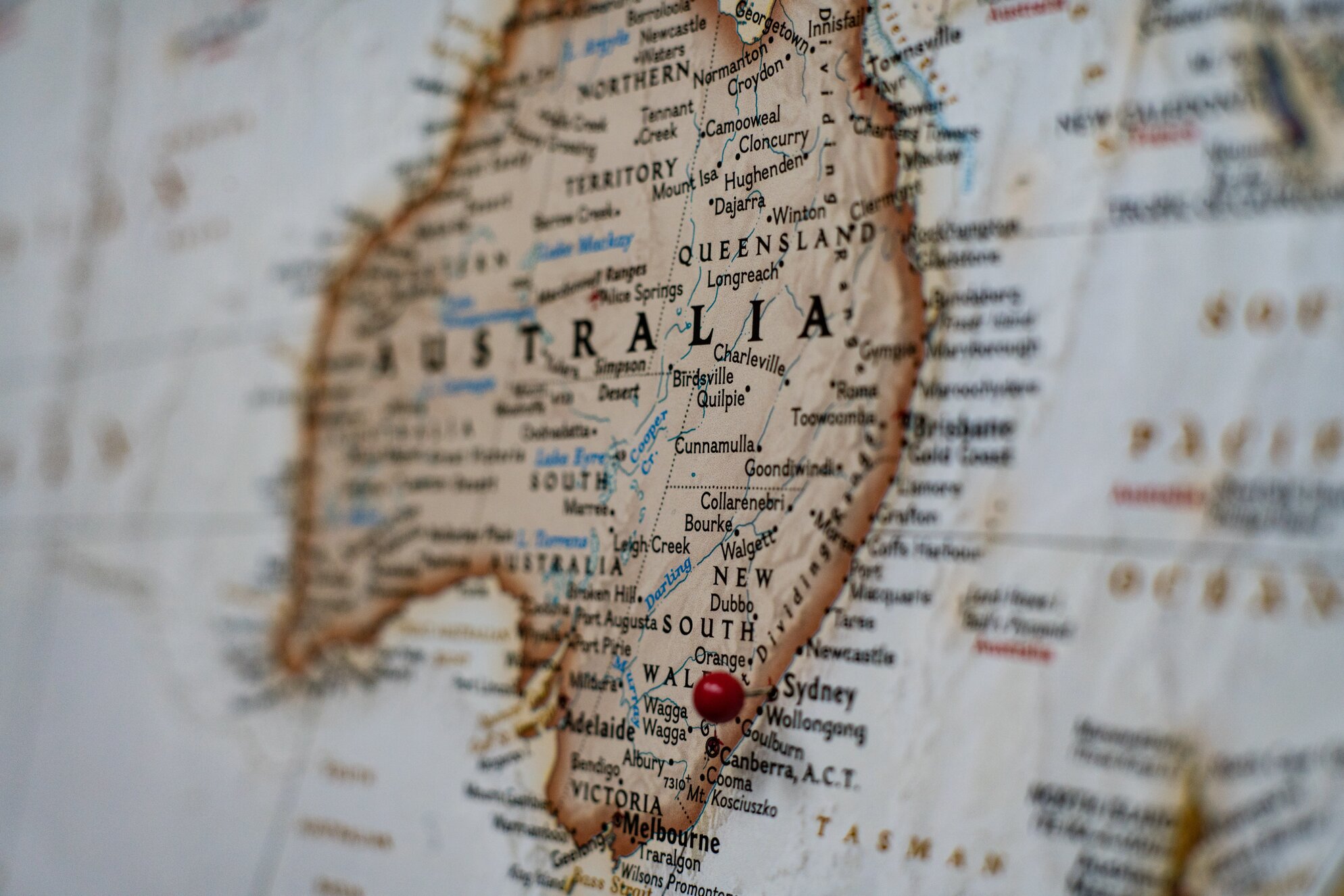
The Morrison Government will inject an extra $49.8 million into the Export Market Development Grants (EMDG) program in the 2019-20 financial year, allowing exporters and tourism businesses to get additional reimbursements for costs incurred in marketing their products and services around the world.
The WTO has launched a new dedicated website to respond to the COVID-19 pandemic as this represents an unprecedented disruption to the global economy and world trade, as production and consumption are scaled back across the globe.

In the interest of keeping the arts (particularly music) alive and kicking in these tough times, our Director for Africa and Asia, Ms Collins Rex would like to share the details of an amazing artist who’s streaming three live concerts to three cities in one day this weekend. The concert isn’t free, but US$12 is a small price to pay for music of this calibre.

Maintaining a healthy business in times of global crisis: Business health check. This week we will be discussing Business Health Check as part of our online forum with our expert presenter, Ms Collins Rex. Collins Rex assists clients across a range of international marketing, product development and communications areas, helping them get maximum return on their marketing investment. Collins is passionate about seeing small business do better business, and do it on the global stage!
As the coronavirus epidemic shuts down the global economy, supply chain executives should be taking steps now to ensure that their supply base remains intact in the face of massive disruption. This was certainly the case in the 2008 Great Recession. We recently published a paper that demonstrates empirically that over the period of the major financial crisis, supply managers who regularly assess and develop an understanding of their key suppliers’ working capital conditions are more likely to re-negotiate contracts that revise payment terms, leading to improved supplier working capital and fewer supply chain disruptions. The data was collected smack dab in the middle of the crisis, so we were able to capture what was happening in supply managers’ minds during this period. Right now, shipments have stopped, payments have stopped, and people are being laid off. Taking steps now to avoid future pain when the supply chain starts up is critical to ensure that suppliers survive this massive disruption, and are able to start back up again.

Amidst the difficulties that airlines are experiencing with travel restrictions due to the COVID-19 pandemic, the Australian Competition & Consumer Commission (ACCC) announced today that it had granted an interim authorisation to Regional Express (Rex) “to coordinate flight schedules with Virgin Australia and Qantas Airways on ten important regional flight routes”.
In 2018 Collins Rex, Director of the GTPA had the great privilege of getting to know a group of exceptional women from South Asia who I trained in international business as part of the Australia Awards: Women Trading Globally programme. One of those women is Hanium Maria Chowdury from Bangladesh.
Freight & Trade Alliance (FTA) over recent days has been receiving calls from members as regards the health protocols many facilities had put in place to check not only their staff but also any visitors to their premises.
We had been advised that some businesses had experiences where some government agency officers had refused to comply with these protocols; being standard health questions and if required a contactless temperature check.
Wellcamp Airport (Toowoomba) is still operating during the crisis and strongly supports the Freight & Trade Alliance (FTA) initiative to co-operate with industry through the COVID-19 Air Cargo Bulletin Board.

Russell Wiese and David Thompson of Hunt & Hunt Lawyers recently provided a webinar updating the trade and logistics community of the commercial law and employment issues associated with COVID-19. A summary of the Australian law issues are set out below. The issues will differ from jurisdiction to jurisdiction and it is importation to obtain local advice. If you need assistance with Australian trade law issues please contact Russell at rwiese@huntvic.com.au. If you need employment law assistance, please contact David at dthompson@huntvic.com.au.
GTPA would like to thank Paul Zalai and the team at Freight & Trade Alliance (FTA) for working to ensure COVID-19 Air Freight Funding. This is great news.

Our GTPA management team is pulling together to help to personally subsidise small businesses through a new service.
Every week we will personally look to subside access to a business service or solution / support initiatives for people self-isolated at home.
We hope that by making a small contribution here we can help small businesses/ sole traders/ freelancers whilst also at the same time providing access to valuable support services to our global business network.
We are currently living in extraordinary circumstances, and first and foremost we must remain safe and keep ourselves, our community, and those closest to us healthy.
The Global Trade Professionals Alliance (GTPA) is joining forces to collaborate with the Institute of International Trade (IIT) at The University of Adelaide and the Supply Chain Resource Cooperative (SCRC), Poole College of Management at North Carolina State University.
As a group, we are aware that as businesses implement major changes to manage disruptions and continue operating, many could benefit from the insight and fellowship of peers in similar positions, and the assistance of experts who can offer advice and leadership.
These online forums will allow you to meet other business operators ‘virtually’ for expert-moderated interactive online discussions. Here you can raise questions on issues you might be facing and as a global community we will mobilise our collective experience and expertise to listen and try to provide practical assistance.
The Department of Foreign Affairs and Trade (DFAT), as a part of the foreign policy white paper, is looking into ways to support to service sector in Australia and to better support and assist these firms in their international growth. We would like to invite you to participate in a study aiming to understand more about the experiences of service businesses who export their services fairly soon after their inception (also known as ‘born global’ businesses). The research will be used by DFAT to understand more about the challenges faced by these businesses, and will be used to inform improved support and assistance to help these businesses succeed and grow their international business activities.
Collins Rex is the Asia/ Africa Director for the GTPA who has owned and operated her own very successful businesses on two continents. In her professional capacity she assists clients across a range of international marketing, product development and communications areas, helping them get maximum return on their marketing investment. Collins is passionate about seeing small business do better business, and do it on the global stage!

Last Thursday the WTO held a workshop to celebrate the 25th Anniversary of the WTO Agreement on Rules of Origin, CEO of the GTPA Lisa McAuley was asked to speak on a panel to discuss increasing demands on product certification and origin traceability. Below is a copy of the speech.
Despite an international context that has grown more hostile for global trade, flows of goods, services, and investment continue to develop, encouraged by the negotiation of free trade agreements and the emergence of global value chains. This entails constant changes to our work on rules of origin. By the time we think we have found a solution to a problem, new demands emerge that also require our creativity and commitment. Hence, the importance of this event so that we do not lose momentum in addressing old and new challenges.

In advance of International Women’s Day on the 8th March, the GTPA is today pleased to build on the campaign we launched last year to shine a light on the women who rock international trade. Last year we focused on women working within international trade from the perspective of working within global trade as a professional.In 2020, our campaign will focus on highlighting women rocking international business, from business owners to CEOs to those working within different business functions supporting business development and growth.
By Peter Langley, Vice President, FedEx Express Australasia
Small to medium-sized enterprises (SMEs) are the backbone of the Australian economy with its contribution to the nation’s GDP of 57 per cent and accounting for 67 per cent of total employment in Australia. We are increasingly seeing the business landscape changing for the benefit of SMEs, from policy recommendations that improve cashflow for SMEs, to free-trade agreements for the benefit of bilateral trade on all scales.
However, local businesses are also experiencing an increasing amount of pressure to go further afield. Even though cross-border trade has a positive impact to revenue, we are finding that only 75 per cent of Australian SMEs are currently exporting goods compared to 91 per cent importing.
Over 90,000 Chinese international students remain stuck outside Australia due to Coronavirus travel restrictions. China exposed export businesses will also be substantially impacted. Estimates of the potential direct adverse economic impact of the Coronavirus on Australia currently range from $3 - $8 billion and are increasing daily.
Edtech startup Practera platform is enabling one innovative response with its successful Global Trade Accelerator program and a range of Government, peak body, education provider and export partners.

Tickets are now on sale for the Margaret Thatcher Conference on Trade, in partnership with the City of London Corporation and HSBC.
The Margaret Thatcher Conference is the Centre for Policy Studies’ flagship annual event. It aims to provide a platform for senior politicians, business representatives and experts to discuss top line, international topics in front of a high level audience.
Opinion by Niels Strazdins, Head of Global Trade Policy & Europe Director at Global Trade Professionals
The 2020 coronavirus outbreak in China has been declared a global health emergency and concern is growing over its potential to become a pandemic. With over 600 fatalities to-date, the scale of the human tragedy cannot be ignored and is increasing by day.
Beyond its tragic human impact on the residents of Hubei province, China more broadly, and the rest of world, the outbreak’s economic consequences are also mounting.
Disruption is radiating from the world’s second-largest economy across international supply chains and commercial networks. It is testing their resiliency and the contingencies put in place to mitigate the impact of international crises such as viral outbreaks.

As the issue of sustainability continues to be at the forefront of global awareness, various initiatives and activities demonstrate the extent to which institutions are taking the matter more seriously. But is enough being done and is there sufficient understanding of the issues at play here?