
Understanding marketplaces and platforms
Successfully selling online is dependent on choosing the right channel to market.
Around the world, businesses are experiencing both distress and cautious optimism as they grapple with the effects of COVID-19. While thousands of them, particularly micro, small and medium enterprises (MSMEs), have had to close, many others continue to engage in global value chains (GVCs), or supply chains more broadly. While some parts of the manufacturing and services sectors, like the automotive and hospitality industries, have been severely affected, other sectors such as medical devices and telecommunications have seen demand grow exponentially.
The way large businesses and MSMEs are experiencing disruptions also differs greatly, and within MSMEs themselves, the reality has been different for women-led businesses and MSMEs in small and developing economies. The current crisis, thus, offers opportunities to business and hopes for the future of global trade, but at the same time will require the largest business rescue and support programmes of the past century.
Today, more than two-thirds of world trade occurs through global value chains (GVCs). With the world economy facing multiple disruptions, including slow economic growth, natural disasters, and more recently the COVID-19 pandemic, GVCs, and supply chains more broadly, are transforming rapidly, even more now than at the beginning of 2020. While past decades fostered an expansion and enlargement of GVCs, more recently some have also shortened and become more localised, a trend which is likely to increase in the coming years as large and small businesses reconfigure their operations due to the pandemic and the eager adoption of digital technologies.
Please join the GTPA and our partners for the next business health check event on Crisis recovery strategies for small business. This session will explore, among a few topics, how to manage your way out of a crisis or disaster as well as planning and managing supply chain in a crisis.
Australia and Singapore have today signed a landmark Digital Economy Agreement (DEA) to further enhance digital trade opportunities for businesses and consumers in both our nations. Federal Trade Minister Simon Birmingham, who signed the Agreement with Singapore’s Minister for Trade and Industry Chan Chun Sing in a virtual signing ceremony, said it would help to expand the scope of our economic engagement with our largest two-way trading partner in South-East Asia.
International supply chains have become a topic of fierce debate in Germany over the past weeks, and perhaps surprisingly not for pandemic-related issues. Proposed new laws requiring due diligence by firms to prevent human rights violations in their supply chains sparked controversy over the degree of responsibility firms can realistically be expected to bear, and how they may enforce this obligation. This “German” debate has relevance beyond the country’s borders, as developed country multinational corporations in particular are under increasing pressure to enhance their corporate social responsibility.
AAEI's Annual Conference and Expos provides a forum for trade service providers to reach decision making exporters and importers with new systems and products to facilitate supply chain logistics. AAEI is the leading trade association for technical expertise, and we have the latest information on a wide variety of topics, with some of the top experts in the industry. This year, AAEI will be conducting our conference in a "virtual" environment and expect to reach a broader audience of trade professionals in the United States and internationally.
With the world economy facing multiple disruptions, including slow economic growth, natural disasters, and more recently the COVID-19 pandemic, global value chains (GVCs), and supply chains more broadly, are transforming rapidly. While past decades fostered an expansion and enlargement of global supply chains more recently some have also shortened and become more localised, a trend which is likely to increase in the coming years as MNCs and SMEs reconfigure their operations due to the pandemic and the resulting escalated adoption of digital technologies.
With the world economy facing multiple disruptions, including slow economic growth, natural disasters, and more recently the COVID-19 pandemic, global value chains (GVCs), and supply chains more broadly, are transforming rapidly.
While past decades fostered an expansion and enlargement of global supply chains more recently some have also shortened and become more localised, a trend which is likely to increase in the coming years as Multinationals (MNCs) and Small to Medium Enterprises (SMEs) reconfigure their operations due to the pandemic and the resulting escalated adoption of digital technologies.
The Global Trade Professionals Alliance (GTPA), supported by the Australian Government and on behalf of the Asia-Pacific Economic Cooperation (APEC) forum, is pleased today to launch the APEC Global Supply Chains Resiliency Survey.
Today, more than two-thirds of world trade occurs through global value chains (GVCs). With the world economy facing multiple disruptions, including slow economic growth, natural disasters, and more recently the COVID-19 pandemic, GVCs, and supply chains more broadly, are transforming rapidly, even more now than at the beginning of 2020.
While past decades fostered an expansion and enlargement of GVCs, more recently some have also shortened and become more localised, a trend which is likely to increase in the coming years as large and small businesses reconfigure their operations due to the pandemic and the eager adoption of digital technologies.
En momentos en que la economía mundial enfrenta múltiples interrupciones, incluido el lento crecimiento económico, desastres naturales, y más recientemente la pandemia del COVID-19, las cadenas globales de valor (CGVs), y las cadenas de suministro en general, están experimentando una rápida transformación.
Durante las décadas pasadas, las cadenas globales de suministro se ampliaron y expandieron. Sin embargo, algunas de esas cadenas también empezaron a mostrar signos de acortamiento o localización. Esto último, es una tendencia que probablemente aumentará en los próximos años en la medida en que compañías multinacionales (CMNs) y pequeñas y medianas empresas (PYMEs) reconfiguran sus operaciones debido a la pandemia, así como a la extensa adopción de tecnologías digitales.
Global Trade Professionals Alliance (GTPA), apoyada por el Gobierno de Australia y en nombre del Foro de Cooperación Económica Asia-Pacífico (APEC), se complace por el lanzamiento de la Encuesta Global de Resiliencia en Cadenas Globales de Suministro en APEC.
Following on from our popular “Digital Marketing: The Basics” session, GTPA brings you “Digital Marketing: The Next Level." You can watch the webinar with Daniel Visser, the Managing Director of Wicked Witch Software a leading figure in the digital games world.
As COVID-19 restrictions are lifted, businesses will continue to need to meet compliance requirements imposed by government and industry to protect the health and safety of employees and customers. Join us for a conversation between the ICC Secretary General and the Co-founders of AOKpass about how it can support and complement your return to work strategies and standard operating procedures.
Following on from our popular “Digital Marketing: The Basics” session, GTPA brings you “Digital Marketing: The Next Level." For this session, we’re delighted to be joined by a leading figure in the digital games world.
Fifty years ago, few people even had an idea about what ethical and unethical practices were happening behind the scenes of their supply chain. However, in recent times, we’ve come to realize the human, animal, and environmental impact of the products we use every day. Because of this, businesses have had to react, and today’s consumers expect that their money does not support things like sweatshops and child labor. As a business owner, how do you find partners that utilize ethical practices throughout the entire supply chain?
The following snapshot information on the range of trade-related Federal Government support and advice available to help Australian business take advantage of free trade agreements that may be useful for your business. It is a helpful summary reference.
Craig Weeks, the newest of the Supply Chain Resource Cooperative’s (SCRC) eight executive advisors, is no stranger to helping students. Every year for the last 15 years, the business veteran has “adopted” a senior from his alma mater, Dickinson College, to help them get their resume in shape, network with alumni and ultimately land their first job.
The Victorian Government has announced a new $534 million Business Support Package which will provide more support to help businesses and workers through to the other side of the coronavirus (COVID-19) pandemic.
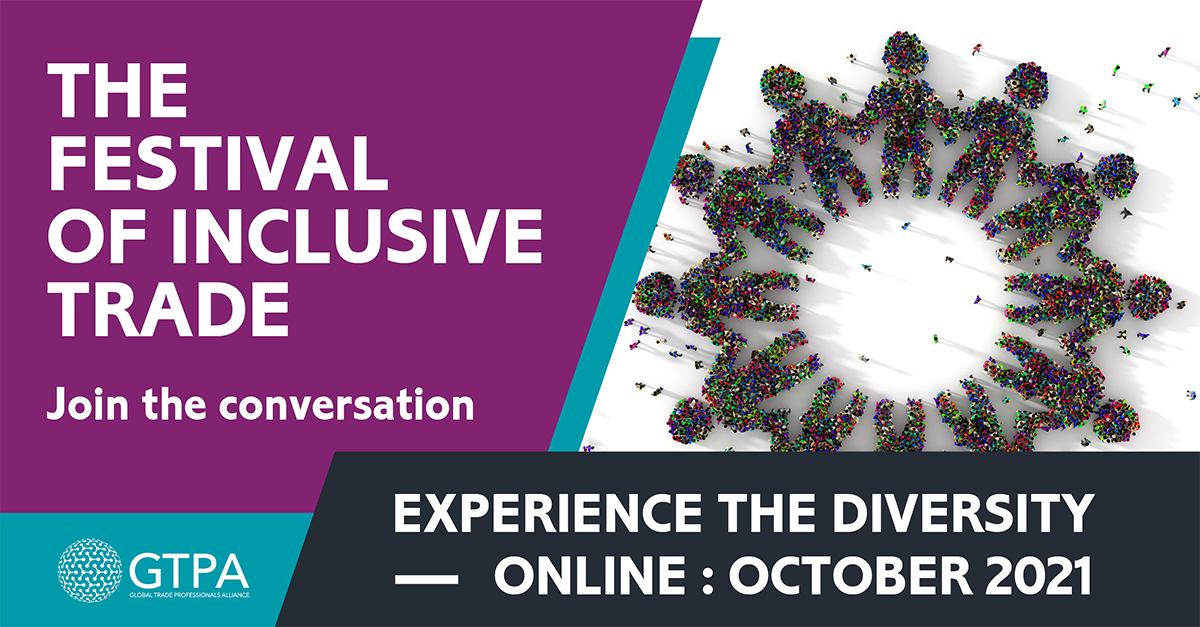
Inclusive trade refers to the principle that all levels of society should gain from increased trade. It promotes the inclusion of groups that may currently be marginalised or challenged in their ability to engage with international trading opportunities.
The GTPA is planning to develop an Inclusive Trade White Paper that will produce practical recommendations on how capacity building and standard setting can facilitate a more inclusive international trading ecosystem.
The Horasis Extraordinary Meeting is the world's foremost gathering of business leaders who interact with key government officials and eminent thought leaders. Under the theme Unite. Inspire. Create, 500 of the most senior members of the Horasis Visions Community will gather virtually to overcome the profound economic, political and social disruptions caused by Covid-19. The Horasis Extraordinary Meeting offers the conceptual backbone and action platform to advance the recovery - envisioning and implementing novel business models, new political cooperation and deep social cohesion.
In 2020, every business – however small – needs to be digitally enabled to some extent. Whether it’s having a virtual shopfront in the form of a website and a fully functioning eCommerce solution, an automated production line, or even just email and a mobile phone, technology is an intrinsic part of the way in which we do business.
How confident do you feel using the Incoterms® rules? Do you feel comfortable advising your clients or colleagues in other departments? Can you explain the rules to them in simple terms? Perhaps you have a solid understanding of the Incoterms® rules. You know the definitions and can recite the contractual obligations off by heart but still have some niggling questions or concerns. Or maybe you’re just not sure your understanding is 100% up to date since the launch of the Incoterms® 2020 at the start of this year.
We hope that you are keeping in good health and spirits in these challenging times. We are delighted to announce that ExCred New York, the No. 1 summit for insuring trade and investment in the Americas is taking place on 5th - 6th of October at Convene 605, New York. Join us in New York or virtually from anywhere in the world this October, as we explore the profound impacts that the global pandemic has had on the wider economy and international trade and the opportunities and challenges that have arisen.
GTPA is delighted to announce a collaboration with ManchesterCF a global financial intelligence training service. ManchesterCF training solutions are designed to train financial services and banks in core areas that can help them to combat money laundering, terrorist financing, proliferation financing, corruption & financial fraud.
The two organisations will collaborate with the purpose of strengthening the relations between the two organisations regarding the ISO/IEC 17024 certification of trade and compliance professionals with a focus on and the linkages to the ManchesterCF expertise as a leading educational provider in this field.
Following the unprecedented ramifications of the coronavirus pandemic and subsequent uncertainty over both the safety and viability of holding physical events, Global Trade Review is delighted to announce that GTR Asia 2020, the world’s largest trade finance gathering, will this year be taking place virtually, on September 8-10.
This exciting new initiative, combining a mixture of live-streamed and pre-recorded content and unrivalled networking via GTR’s dedicated virtual event platform, will offer the chance to hear the latest developments from experts on the many challenges faced across the industry, as well as the chance to connect with speakers, sponsors and attendees alike across the 3 days.
In 2020, every business – however small – needs to be digitally enabled to some extent. Whether it’s having a virtual shopfront in the form of a website and a fully functioning eCommerce solution, an automated production line, or even just email and a mobile phone, technology is an intrinsic part of the way in which we do business. This week’s “Business Health Check” session is a small business technology primer.
As Australia celebrates National Reconciliation Week, the Global Trade Professionals Alliance (GTPA) recognises the contribution Indigenous Australians have made to Australia’s culture, identity and achievements.
Reconciliation is about a mutual strengthening of relationships between Indigenous and non-Indigenous Australians to create a more just, equitable and reconciled Australia. Trade and commerce play an integral role in this.
The world of trade looks set to be another of the many casualties of the coronavirus pandemic, as international banks reassess the risks faced by exporters, warehouses fill up with delayed shipments of goods that retailers are no longer able to sell, and access to dollar liquidity dwindles. Lisa McAuley, CEO of GTPA will be joining an esteemed panel to discuss.
The creative industries contribute around $112 billion to the Australian economy, and employ over 640 000 people. The creative industries generate substantial Australian exports, and globally the sector accounts for 7% of the world’s GDP. COVID-19 and the measure implemented to curb its spread has had a devastating effect on the creative sector, with theatres, art galleries, music venues and museums all closed or attendance number drastically curtailed.
Inclusive trade refers to the principle that all levels of society should gain from increased trade. It promotes the inclusion of groups that may currently be marginalised or challenged in their ability to engage with international trading opportunities.
The GTPA is putting the finishing touches on an Inclusive Trade White Paper that will produce practical recommendations on how capacity building and standard setting can facilitate a more inclusive international trading ecosystem, with particular reference to four groups: gender, youth, diaspora and indigenous communities.
To coincide with the launch of the Inclusive Trade White Paper, the GTPA is excited to announce a “Festival of Inclusive Trade”.
We are pleased to share this first piece in a series exploring resilient supply chains for a post-Covid world, and welcome readers’ insights and perspective as they conduct business across regions and industries. Niels Strazdins is Head of Trade Policy at the Global Trade Professionals Alliance (GTPA). Professor Robert Handfield is Bank of America University Distinguished Professor of Supply Chain Management at North Carolina State University, and Director of the Supply Chain Resource Cooperative. Professor Ian George is the owner of ProPar Consulting Ltd.
How critical is cash? Some would argue Cash is King. That the Cashflow Statement says much more about the health of a business than it gets credit for. Accountants and investment analysts will look at this with a slightly different lens and priority, but most SMEs, anywhere in the world, live or die by cash.
The next session in the GTPA’s “Business Health Check” series is focused on exactly that – “Cash Management and Supply Chain Finance (SCF) during COVID-19”.
Following the unprecedented ramifications of the coronavirus pandemic and subsequent uncertainty over both the safety and viability of holding physical events, Global Trade Review is delighted to announce that GTR Asia 2020, the world's largest trade finance gathering, will this year be taking place virtually, on September 8-10.
Collins is the owner of ideas generator and actuator, Rex Ideas. She is also the Asia & Africa Director for the Global Trade Professionals Alliance (GTPA).
Collins has owned and operated highly successful communications and consultancy businesses on two continents, and in her professional capacity assists clients across a range of international training, marketing, product development and communications areas, where she leverages her background as an award-winning radio announcer to hone businesses’ presentation skills. She numbers governments, trade organisations, industry associations and not-for-profits amongst her clients.
The global COVID-19 pandemic has impacted people, business and societies in new and profound ways. Acknowledging the challenges ahead, the Asia Pacific Foundation of Canada and the Global Trade Professional Association (GTPA) joined forces to help business communities and governments alike navigate the future and improve trade and investment governance that help the world get back on its feet.
As economies slowly emerge from COVID-19 lockdowns, business is taking the first tentative steps towards normal operations. And now, more than ever, there is a need to take stock and revise business plans and strategies to ensure both recovery and future growth.
Toward a more just and inclusive trading future.
In July the GTPA will be launching a new white paper on Inclusive Trade which will recognise the important role that Inclusive Trade can play in economies around the world so that the gains from trade flow to all members of society equally.
The impact of servicification on global supply chains in the ASEAN region: dynamics, restrictions, and policy implications
International trade in services, especially via exports from emerging markets, is increasingly being channelled through the embedding of services in the export of goods. These goods include intermediate products, which are elements of Global Value Chains (GVCs).
Deadline for submissions: 31 August 2020
The Jean Monnet Network; Trade & Investment in Services Associates (TIISA) brings together leading academics across Europe, Asia and Australia and key institutions - Sussex University, University of Adelaide, Örebro University, National Tsing Hua University, Utrecht University, University of International Business and Economics, Chinese University of Hong Kong, World Trade Institute in research on domestic regulation and global governance of services trade and investment flows.
Collins Rex is the Asia/ Africa Director for the GTPA who has owned and operated her own very successful businesses on two continents. In her professional capacity she assists clients across a range of international marketing, product development and communications areas, helping them get maximum return on their marketing investment. Collins is passionate about seeing small business do better business, and do it on the global stage!