GTR MENA 2021 Virtual
GTR MENA will return in 2021 as a hybrid event, offering an extended offering as the region’s leading gathering for networking and knowledge sharing, with a virtual event on February 15-17 and a physical event on September 22.
In 2020, the COVID-19 pandemic forced sweeping changes to the way we work, learn, and communicate. Accompanying those sweeping changes to our business and personal lives has been a dramatic rise in cyber risk, specifically malware and ransomware.
Cybersecurity Survey for Small and Medium-sized Enterprises (SMEs)
The Cyber Readiness Institute (CRI), in partnership with the International Chamber of Commerce, is conducting research on the cybersecurity preparedness and resilience of SMEs. We would appreciate hearing from you about the cyber readiness of your enterprise.
The Pacific Agreement on Closer Economic Relations (PACER) Plus is a landmark trade and development agreement that has been signed by 11 Forum Island Countries: Australia, Cook Islands, Kiribati, Nauru, New Zealand, Niue, Samoa, Solomon Islands, Tonga, Tuvalu, Vanuatu. The Agreement covers goods, services, and investment. It aims to lower barriers to trade, provide greater certainty for businesses, raise living standards, create jobs and increase exports across the Pacific.
The Parties to PACER Plus are looking to appoint a suitably qualified and experienced person to work as the Head of the Implementation Unit reporting to the PACER Plus Joint Committee. The key objectives of this senior level role are to provide critical leadership and technical expertise on trade and development for the new PACER Plus Implementation Unit.
GTR India will return this year as a hybrid, providing an extended offering as the country’s leading event for trade insights, networking and knowledge sharing, firstly with a virtual event taking place on March 10-11, and later with an in-person gathering in October 2021.
In November 2020 we launched a unique online educational experience designed to equip mid-senior business leaders with the technical trade knowledge and advance complex and adaptive thinking capabilities required to succeed in today’s global business environment.
Global trade and global value chains will continue to transform due to the COVID-19 pandemic. In order to understand that transformation better, in partnership with the Department of Foreign Affairs and Trade of Australia and APEC the GTPA ran a survey for multinational corporations, small and medium enterprises, and industry and government organizations on global value chains resilience.
The need for standards to facilitate trade has been repeatedly mentioned by policy reports at the domestic and international level.
GTPA is currently working on a solution to facilitate business opportunities between multinational corporations and micro, small and medium enterprises participating in global value chains. More importantly, the solution seeks to address some of the gaps that small businesses tend to have in their supply chains with regards to what we call integrity-related standards, that is, standards to mitigate security, sustainability, and ethical behaviour risks, while enhancing diversity and inclusion.
Let’s celebrate the start of a new year by focusing on some positives from 2020! In these very difficult times when so many businesses have been forced – through legislation or circumstance – to close their doors, there are some who have bravely soldiered on and who are also doing their best to help support their community.
Inclusive trade refers to the principle that all levels of society should gain from increased trade. It promotes the inclusion of groups that may currently be marginalised or challenged in their ability to engage with international trading opportunities.
To highlight both the challenges faced and the contribution made by marginalised groups to the rich tapestry that is international trade, this year GTPA Director, Collins Rex, organised over 60 online events as part of the “Festival of Inclusive Trade”.
On December 16, Major Dan Finkenstadt and I will be delivering a webinar on the upcoming roll-out of the vaccine.
BAFT and CGI recently conducted a survey of more than 200 BAFT members in an effort to better understand the current state of technological advancements in trade, and how the pandemic has accelerated their importance and need.
The GTPA is pleased to be part of the ICC work on the Saves our SMEs initiative. As part of the SMEs committee we provided input into the recently released recommendations. ICC has issued 10 recommendations for how governments can use trade to help micro-, small- and medium-sized businesses (MSMEs) weather the COVID-19 storm. Underscoring the vital role can trade play in helping small business stay afloat and driving a rapid economic recovery, the 10 ways for governments to use trade to Save our SMEs statement calls on governments to take urgent action to Save Our SMEs.
Tokyo, November 26, 2020 - Mitsubishi Heavy Industries, Ltd. (MHI) has agreed to make a capital investment in H2U Investments, the holding entity of the H2U Group. The H2U Group includes The Hydrogen Utility (H2U), the leading Australian developer of green hydrogen and green ammonia projects using power derived from renewable energy sources. The agreement also includes MHI's support for H2U's projects and business development initiatives, including supporting the Front-End Engineering and Design (FEED) study for H2U's Eyre Peninsula GatewayTM project in South Australia.
The Directors of GTPA would like to congratulate Mr Simonet who was today appointed to the new role of CEO at Austrade. Mr Simonet is currently Group CEO and Managing Director of Kathmandu Holdings, which comprises the Kathmandu, Rip Curl and Oboz brands, and has previously held the roles of CEO of Radley London and International Director of Seafolly Group. He also worked for 11 years for LVMH (Louis Vuitton Moet Hennessy) in Europe, Asia and Australia.
Just a brief reminder that we are still on the lookout for individuals to join us in forming a new Executive Board for 2020 and we are still gathering Expressions of Interest (EOI) for our coming Executive Board election for the new year. A meeting to elect PIT’s new Executive Board will take place ONLINE on Thursday 26th of November at 5.30pm (AEST).
On this occasion, we will also have our AGM for 2020 prior to the election, which will give you a clear overview of the association's achievements & initiatives but also our strategical plans for the year to come.
Originally published in International Banker Magazine, November 2020
The COVID-19 crisis is unprecedented in reach, speed of contagion and spread—and in the depth of economic impact that will result. COVID-19 is devastating human beings, families, communities and businesses across the globe. It is doing so within the context of a persistent focus on trade wars, troubling evidence of narrow self-interest in international activities, and increasing disrespect from various circles for multilateralism and the norms of international engagement.
There is a growing consensus that public finances won't be enough to help least developed countries (LDCs) recover from COVID-19.
Join investors, business and government leaders in this digital event to discuss how COVID-19 has impacted finance and investment for trade in LDCs and what strategies can help LDCs access new sources of finance and investment for trade.
The Informal Working Groups on MSMEs have acknowledged that promoting the participation of Micro, Small and Medium-sized Enterprises (MSMEs) in international trade is an important issue in the WTO agenda, all the more considering the significant negative impact that the COVID-19 pandemic has had including on MSMEs, as well as the contribution that the WTO can make to support the global recovery; Reaffirming the pledge, as contained in the Joint Ministerial Statement at Buenos Aires, to address obstacles related to foreign trade operations that represent a significant burden for MSMEs interested in participating in international trade.
Lessons for global trade from the Australia-Singapore Digital Economy Agreement, a two-part series COVID-19 has precipitated huge increases in our participation in digital trade. It has also seen a rise in protectionism, a push for great economic sovereignty and a further fracturing of our online world along US-China fault lines. With all this in mind, how can we create robust global and bilateral framework for governing digital trade?
Lessons for global trade from the Australia-Singapore Digital Economy Agreement, a two-part series COVID-19 has precipitated huge increases in our participation in digital trade. It has also seen a rise in protectionism, a push for great economic sovereignty and a further fracturing of our online world along US-China fault lines. With all this in mind, how can we create robust global and bilateral frameworks for governing digital trade?
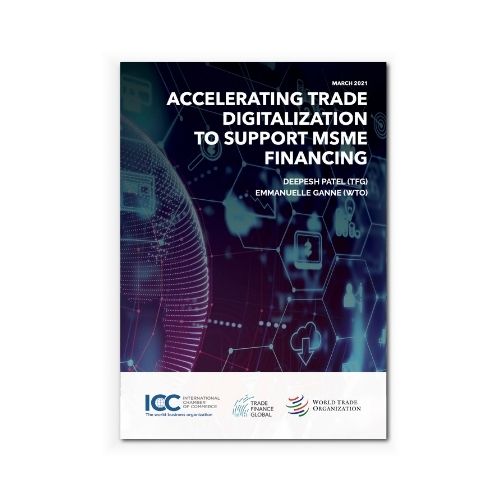
The GTPA is pleased to support and partner with TFG on the recent White Paper which was jointly produced by Deepesh Patel, Editorial Director, Trade Finance Global (TFG), and Emmanuelle Ganne, Senior Analyst at the World Trade Organization (WTO).
Lisa McAuley, CEO GTPA and Robert Handfield, Executive Director, SCRC, NC State University recently presented the early insights into the recent APEC survey on the impact of COVID-19 on global supply chains and international business.
The Australian Government together with the Global Trade Professionals Alliance (GTPA) recently held an interactive workshop to share the preliminary results of the APEC Supply Chains Resilience Survey.
Trade is crucial to the recovery from COVID-19, but in a more complicated political, economic and security environment. It is critical to “build back better”, and to build a standardised, digitised and connected ecosystem that covers both trade and trade finance, that allows for the streamlined introduction of new participants (including new suppliers of capital in trade finance) and which reduces the time, risk and cost of trade. While there are a number of current initiatives to digitise trade, or trade finance, there is the need for an integrated solution that brings the best of business, knowledge and government together, and which further leverages the developments in technology, trade and new sources of capital and funding.
International payments experts WorldFirst have sat down with local businesses who are conquering global markets. Learn how Budgy Smuggler and Caden Carbon Wheels have expanded their businesses partnering with WorldFirst.
COVID-19 has exposed the vulnerabilities and strengths of the least developed country (LDC) businesses in supply chains. In the face of coronavirus, the Enhanced Integrated Framework (EIF) is leading a social media campaign to share a message for building the resilience of LDCs in global value chains and to power up trade.
The Global Trade Professionals Alliance (GTPA) is proud to announce the launch of our inaugural Festival of Inclusive Trade! What started out as the drafting of a white paper focussed on the issues faced by marginalised groups when engaging in international trade, has evolved into an online celebration of all things inclusive trade. Featuring over 80 world-class business and art events, the Festival runs for two weeks from 19 October.
The table of COVID-19 support measures shown below has been compiled by the WTO Secretariat. It is an informal situation report and an attempt to provide transparency with respect to support measures taken in the context of the COVID-19 crisis. It does not pass judgment on or question the right of WTO members to take such actions. The measures in the table are not categorized and no assessment of their potential relation to trade is made.
In this session we covered the following topics:
Change in business and government is no longer an identifiable event, but rather a constantly and rapidly evolving state.
The future is uncertain, and problems often transcend the boundaries of single organisations and nations.
Businesses operate in an increasingly complex and unpredictable environment in which change occurs at an unprecedented speed and magnitude. It is important that business leaders have access to the right technical trade knowledge and competencies to enable them to take their place in this ever-evolving environment.
Singapore. 22 September: The International Chamber of Commerce (ICC) Academy is delighted to announce its collaboration with Global Trade Programme Alliance (GTPA), to offer businesses and trade professionals with ISO/IEC 17024 certified training programmes. As per the alliance, anyone who takes the ICC Academy’s trade finance, international business and regulation & compliance certificate programmes, will attain the relevant competency standards for ISO/IEC 17024 certification, under GTPA’s Global Trade Professional (GTP) programme.
Speaking on the collaboration, ICC Academy General Manager Daniel Kok said, “In an ever-evolving global trade environment, business leaders and trade professionals need to have better access to cutting-edge training, so as they develop competencies to cope with the ‘new normal’. As the educational arm of the International Chamber of Commerce (ICC), we have been offering a wide range of specialized online training and blended learning to trade professionals worldwide.
Improving women’s and SMEs access to global markets will be critical to economic recovery and growth in the post-COVID-19 period and beyond.
This survey will help to build resilience through a better understanding of the current needs of business, ensuring that government pandemic support initiatives are appropriate and sufficient to meet these needs. The survey will further help to ensure alignment of future government policies and programs with business needs.
The survey will contribute to a larger goal of the GTPA, which is working with a global coalition of partners established by Bloomberg New Economy, to identify actionable solutions for “Building Business Resilience in Global Value Chains 2020-21”, covering MNCs and SMEs participating in GVCs.
You can download the latest eCommerce session video recording here. In this session you can join Ms Collins Rex who discussed:
Inclusive trade refers to the principle that all levels of society should gain from increased trade. It promotes the inclusion of groups that may currently be marginalised or challenged in their ability to engage with international trading opportunities.
The GTPA is planning to develop an Inclusive Trade White Paper that will produce practical recommendations on how capacity building and standard setting can facilitate a more inclusive international trading ecosystem. The paper will focus on four groups – gender, youth, diaspora and indigenous communities – and the importance of standards and capacity building to support their engagement in international trading opportunities. It will produce recommendations to benefit organisations, institutions and individual professionals engaged in international trade.
To facilitate the development of this white paper, the GTPA is seeking to engage with as many representatives of the highlighted groups as possible.
Today, more than two-thirds of world trade occurs through global value chains (GVCs).
With the world economy facing multiple disruptions, including slow economic growth, natural disasters, and more recently the COVID-19 pandemic, GVCs – and supply chains more broadly – are transforming more rapidly than ever.
According to a recent study, 94% of companies are seeing supply chain disruptions from COVID-19 and 75% have felt negative or strongly negative impacts on their business and 55% of companies plan to or have already downgraded their growth outlooks as a result.
Resilience and redundancy must be rebuilt into global supply chains.
The international trading system pre-Covid-19 pandemic did not provide full opportunities for all strata of society to benefit from international trade.
Beyond its human tragedy, the economic impacts of the pandemic, with national lockdowns shutting key elements of economic activity and global supply chains, have led to the most drastic slowdown in economic activity since the Great Depression.
Crises of this magnitude offer an opportunity for reflection as reconstruction and recovery begins.
As a Micro to Small and Medium Enterprise (MSMEs) you play a major role in the economy, and you account for the majority of businesses worldwide.